
The short answer.
Define the drink handoff and support responsibilities first.
Test with both familiar users and first-time visitors.
Self-service still needs named replenishment and care owners.
Define the handoff
The practical difference between staffed and self service coffee begins with responsibility. Who hears the request, chooses the drink, places the cup, handles milk and resolves a problem? Write the journey from arrival to collection. A machine may automate brewing while a receptionist still handles every other part of the experience.
A useful third option is assisted self service. Guests choose their drinks, while a nearby host explains the station and checks supplies. This can suit a setting where hospitality matters but assigning a dedicated coffee attendant would be unrealistic. Its success depends on someone being available when assistance is needed.
Match the model to the audience
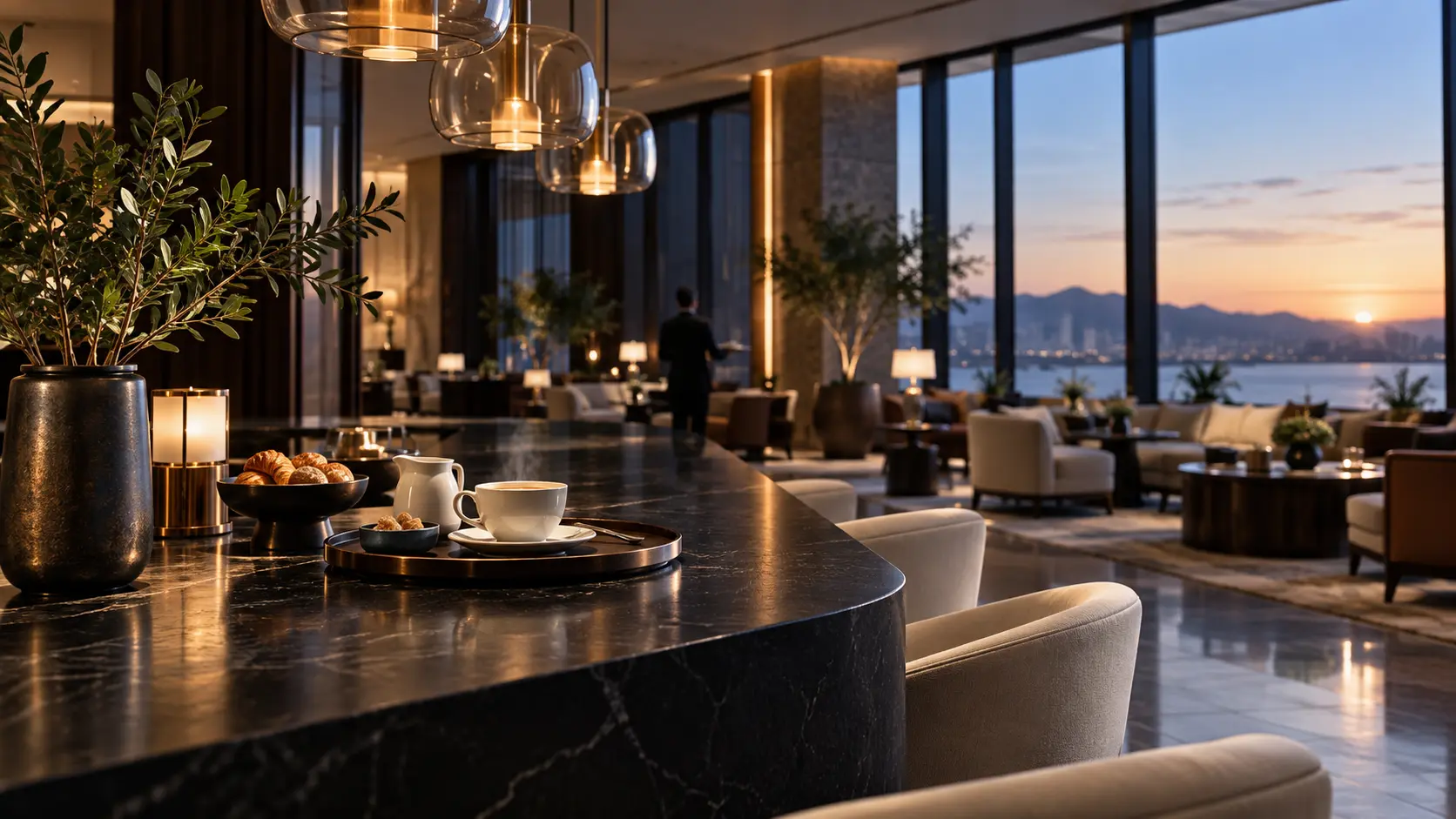
Employees who use the same station every day have time to learn it. Hotel guests, showroom visitors and conference attendees may approach it only once. Observe their likely questions: where cups go, which drink is smaller, whether milk is included and where a finished cup should be collected. Those questions shape signage and support.
For a self service trial, invite first time users and resist coaching them immediately. Record where they hesitate, then improve the station or instructions. For a staffed trial, use the employee who will actually operate the station and include their other responsibilities during the exercise.
Map work outside brewing
Preparation is only one component of service. Someone must restock cups, remove waste, inspect the counter and carry out model specific care. Self service transfers drink selection to the customer; it does not remove the need for an operating owner. Assign a named person for opening, busy periods and closing.
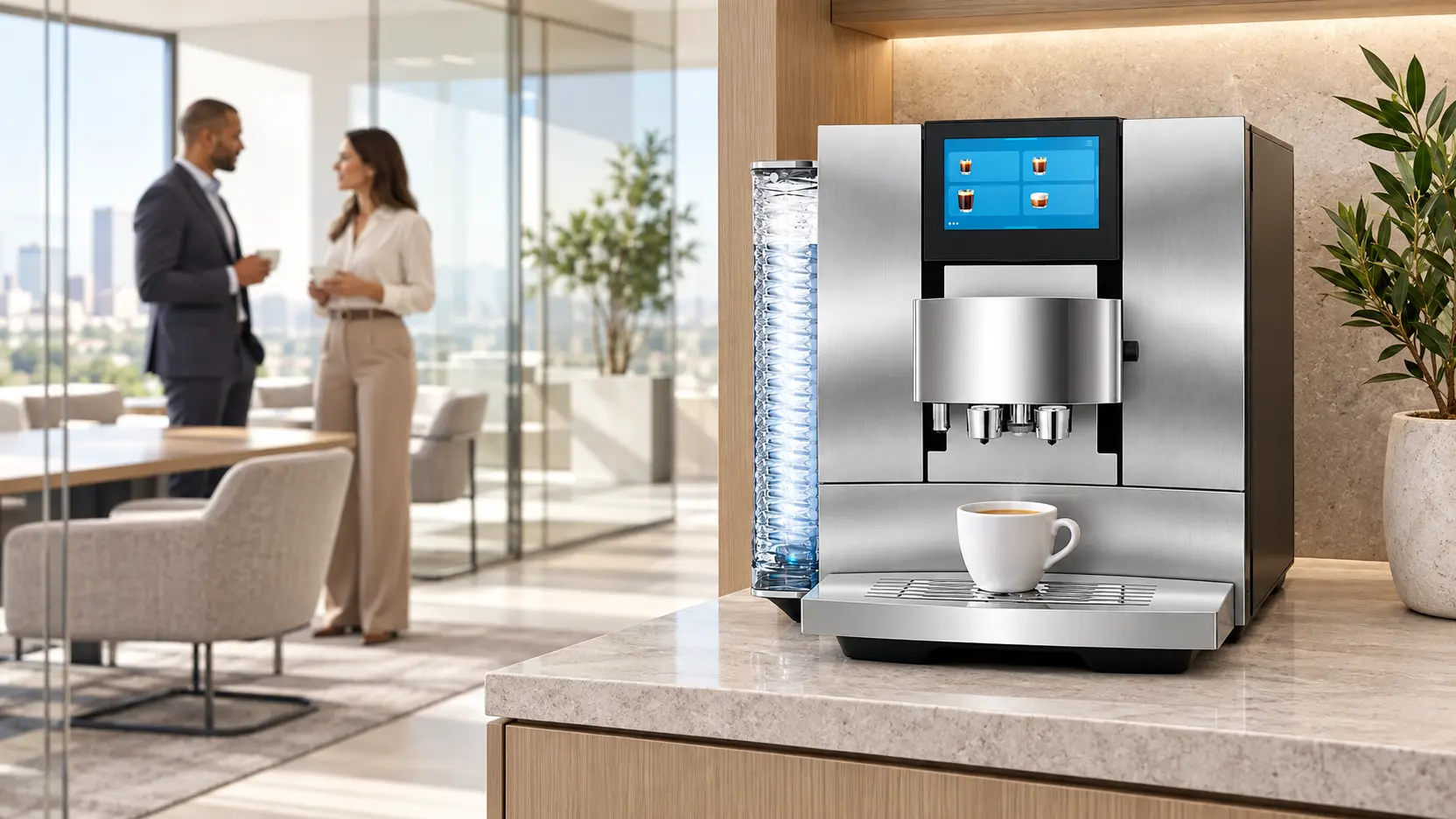
JURA provides integrated rinsing and cleaning programs on the professional GIGA X8. The operational implication is to train an owner to carry out the relevant care workflow and respond to prompts. A program on the machine is useful only when the needed supplies, access and staff attention are available.
Compare the real tradeoffs
A staffed station can keep unusual requests away from the machine interface and coordinate drinks for a table. It also relies on staff availability and a clear order handoff. A self service station can let users choose directly, but demands an understandable menu and a layout that separates brewing from finishing.
Consider a reception desk with frequent telephone calls. If the receptionist is expected to prepare every drink, test what happens when a caller and two visitors arrive together. The answer may be assisted self service, a simpler menu or a different station location. Buying more brewing capacity would not resolve that conflicting responsibility.
Write an operating agreement
Before ordering, agree who can change recipes, who may refill each consumable and who handles faults. Define when the station is open and how users obtain help. For public or guest facing areas, include the process for ingredient questions and requests the station cannot reliably fulfill.
Pilot the chosen arrangement during a representative busy period. Track waiting, interruptions and staff effort, then review the results with the people doing the work. Select equipment after the service model is clear. This creates a stronger connection between the machine, its location and the people responsible for a consistent daily experience.
Choose the operating model before the equipment shortlist
A useful decision exercise is to follow three realistic requests: a regular employee wanting a familiar drink, a first-time guest asking for a recommendation and someone with an ingredient question. Identify who handles each step under staffed, self-service and assisted service. A configuration that works smoothly for the regular employee may still require help for guests. Write down that assistance explicitly instead of assuming the machine interface will resolve every question.
Now test the staffing commitment against competing work. In a showroom, the host may be welcoming an arriving appointment while another guest wants coffee. In a hotel, breakfast replenishment may coincide with several drink requests. Have the actual team describe what happens next in each case. If the proposed operating model repeatedly depends on an employee being in two places, simplify the service promise or provide a realistic backup. Brewing automation cannot create staff availability by itself.
Your final brief should state who selects the drink, who touches the equipment, who handles unusual requests and who restores the station after use. Include which menu changes require manager approval. These boundaries help suppliers recommend an appropriate configuration and prevent a successful demonstration from relying on a level of attention your site cannot provide. Review the model with relief staff as well as the main operator; they often reveal assumptions that regular users no longer notice.
Useful answers, before you decide.
Is assisted self-service just an unclear compromise?
It can be a deliberate model when responsibilities are specific: guests select and collect drinks, while an available host handles questions and monitors supplies. It becomes unclear only when nobody knows when assistance should happen.
Should every staff member be allowed to change recipes?
Set permissions according to the operating plan. Many teams benefit from keeping recipe changes with designated owners while teaching general users only the steps they need. Confirm the available controls for the exact equipment.
Research notes and sources
These references informed this guide. Manufacturer instructions and final purchase terms take precedence.
- JURA GIGA X8 professional features
 Workplace · 5 min
 Workplace · 5 min
 Workplace · 5 min