
The short answer.
Place choices before brewing and finishing supplies after collection.
Trial temporary positions before committing to permanent fixtures.
Preserve staff access alongside the customer route.
Watch the sequence before moving furniture
A queue can grow even when the machine has enough brewing capability. Users may stop to find a cup, read a long menu, add sugar or search for a lid while standing in the only operating position. Observe the full sequence and record where people pause. The location of each pause suggests a different improvement.
Draw a simple plan with arrival, cup pickup, drink selection, brewing, finishing and departure. Add staff replenishment and dirty cup return. Look for crossing paths and places where one person must reach past another. Use a representative busy period so the plan reflects actual behavior.
Put decisions before the operating position
Display the available drinks and cup choices where people can see them while approaching. Use the names shown on the machine, with brief descriptions where needed. Keep optional promotional information away from the core selection instructions. A person should not need to hold the brewing position while deciding what the station offers.
Use a consistent cup arrangement that makes the intended choice easy to identify. If recipes require different cup sizes or positions, make that relationship explicit. Test the instructions with someone unfamiliar with the station and revise the wording where they hesitate or make a reasonable but incorrect assumption.
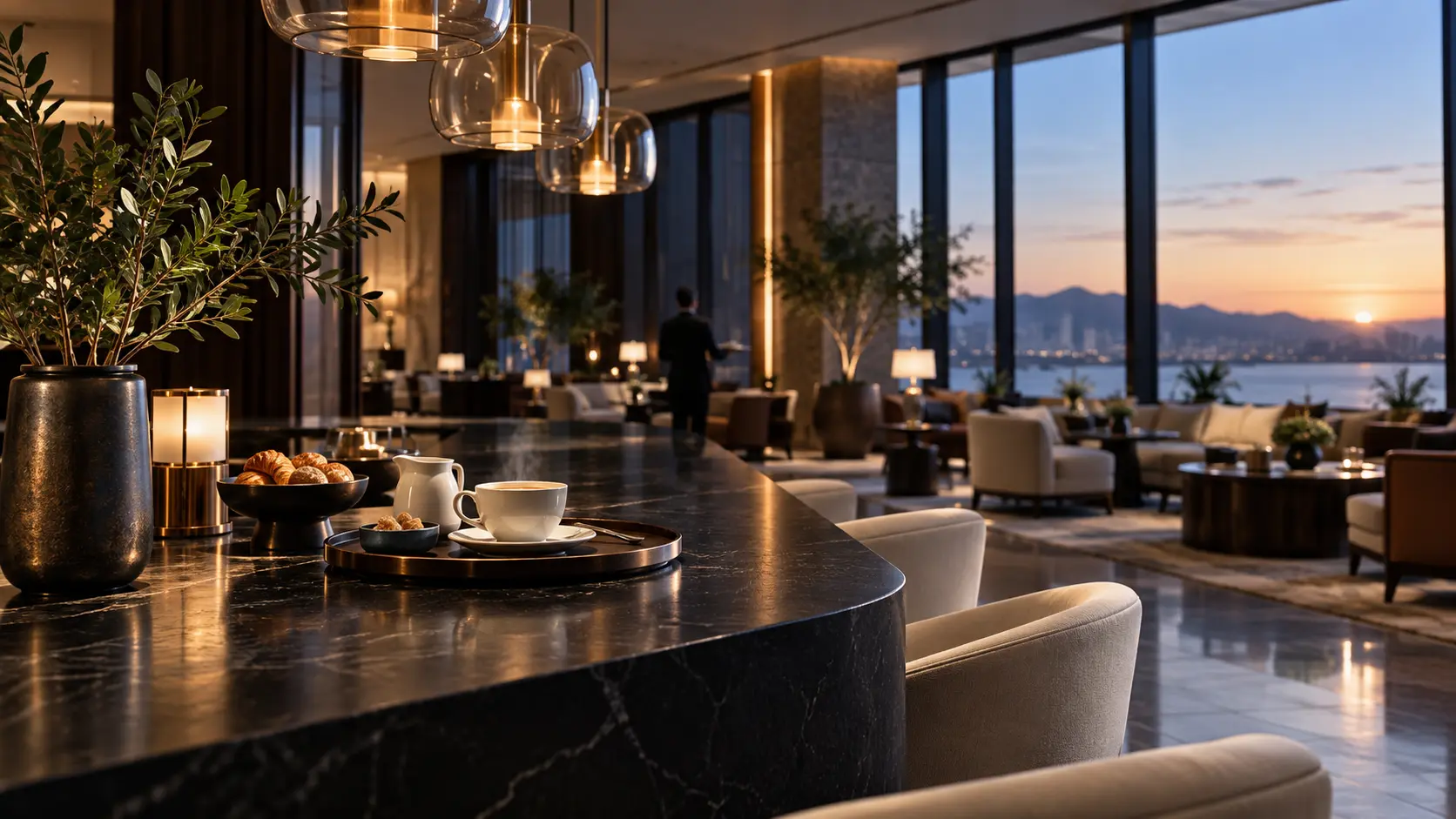
Create a place to finish the drink
Locate lids, stirrers and sweeteners so users can move away after collecting their coffee. Give them an obvious surface on which to finish the drink without blocking the next selection. Check that this arrangement still supports the site’s accessibility and circulation requirements with the responsible facilities team.
For a hypothetical station serving a morning meeting, the brewing area may be clear while three people gather around a lid dispenser. Adding brewing capacity would not remove that delay. A better finishing position, clearer supplies or a second replenished dispenser may be the practical intervention to test first.
Preserve the operator route
Queue design should also protect access for refilling and care. Ask the operator to carry out those tasks while colleagues simulate a queue. Note whether opening a compartment blocks the path, whether supplies must travel across waiting users and whether waste removal interrupts drink collection.
The W8 has a front removable water tank, according to JURA. That feature is relevant only if the counter layout leaves the required access usable. Check the actual movement of removable parts and doors instead of treating the published machine dimensions as the entire working footprint.
Pilot the layout and record the result
Try movable signs and temporary supply positions before committing to permanent cabinetry. Measure the time from joining the queue to leaving with a finished drink, along with the maximum queue length and observed points of confusion. Keep the menu and service period similar when comparing arrangements.
Ask users and the person replenishing the station what became easier or harder. An arrangement that saves a few seconds for customers but makes every refill awkward may not be an improvement over the full day. Keep the layout that supports a clear journey, practical servicing and the site’s approved circulation, then review it when attendance or the menu changes.
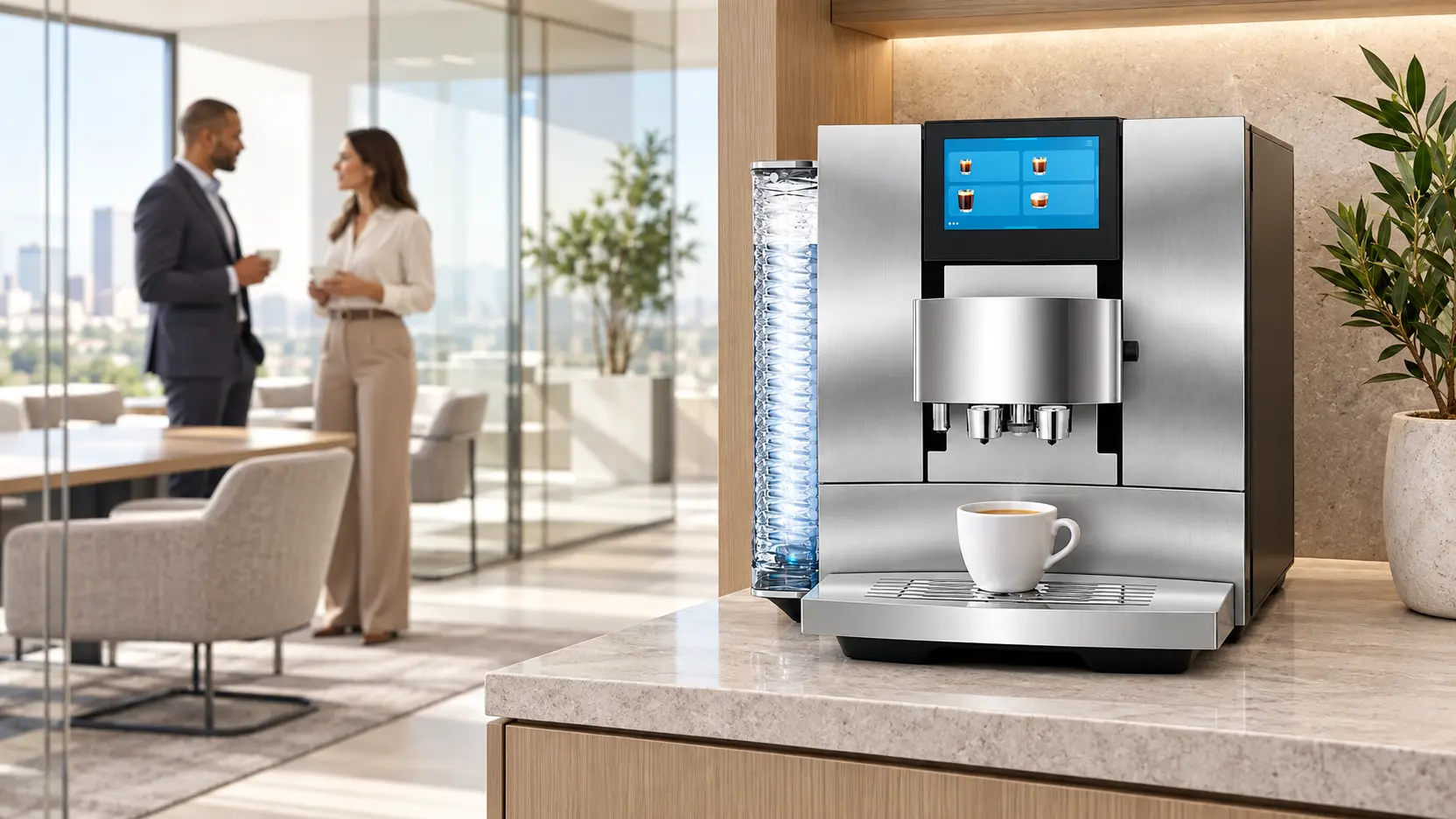
Test the queue with people, cups and supplies
Use a short rehearsal before committing to fixed positions. Ask several colleagues to approach the station with different drinks in mind while another person replenishes cups. Record where the next user stands, where finished drinks land and which supplies cause people to reverse direction. Tape and movable signs make these small experiments easier to change than permanent cabinetry.
Suppose users choose quickly but remain in the operating position to stir sugar and fit lids. Move those finishing items to a clearly visible downstream surface and repeat the same sequence. Keep the machine and menu unchanged so you can attribute the result to the layout. If people still wait mainly for brewing, the next question is equipment or service capacity. If they now hesitate to find the finishing area, improve its visibility before declaring the trial unsuccessful.
Include the person who cleans and restocks in the final review. Ask them to move a normal supply load and remove waste while the station is occupied, then note any crossing route that needs attention. Have facilities confirm the proposed arrangement against applicable site requirements. A successful layout is not merely a faster customer line; it is a practical arrangement that remains clear when supplies run low, a first-time guest arrives and routine care still has to happen.
Useful answers, before you decide.
Will a second machine always solve the queue?
No. If the delay comes from choosing cups, reading instructions or adding lids, another brewer may leave the bottleneck in place. Observe the whole journey and test the specific cause before expanding equipment.
How should I judge whether the new layout works?
Compare similar service periods using queue length, total time to leave with a finished drink and operator effort. Include confusion and replenishment access so a faster pour does not conceal a harder station to maintain.
Research notes and sources
These references informed this guide. Manufacturer instructions and final purchase terms take precedence.
- JURA W8 access and operating features
 Workplace · 5 min
 Workplace · 5 min
 Workplace · 5 min