
The short answer.
Place the coffee offer at a deliberate point in the appointment.
Test preparation without losing attention to the visitor.
Judge success by hospitality and staff effort as well as drink volume.
Decide what the offer should achieve
Showroom coffee is an act of hospitality within a larger appointment. Start with the visitor journey: greeting, consultation, demonstration and departure. Decide when a drink is most welcome and which staff member makes the offer. This avoids the awkward pattern in which several employees ask the same question or nobody knows whether the guest has already been served.
Keep the service proportionate to the space and staffing. An appointment-only showroom may need a different approach from a walk-in retail floor. Review the busiest appointment overlap and the time sales staff can reasonably spend preparing drinks. The coffee plan should fit actual visitor patterns rather than an imagined café inside the showroom.
Create a compact, repeatable menu
Choose a small core menu that staff can explain without leaving the guest. Define the cup size and recipe for each drink so the offer remains consistent between appointments. Include a clear way to request decaf if it is provided. Keep ingredient information available and direct questions to that information rather than making casual assurances.
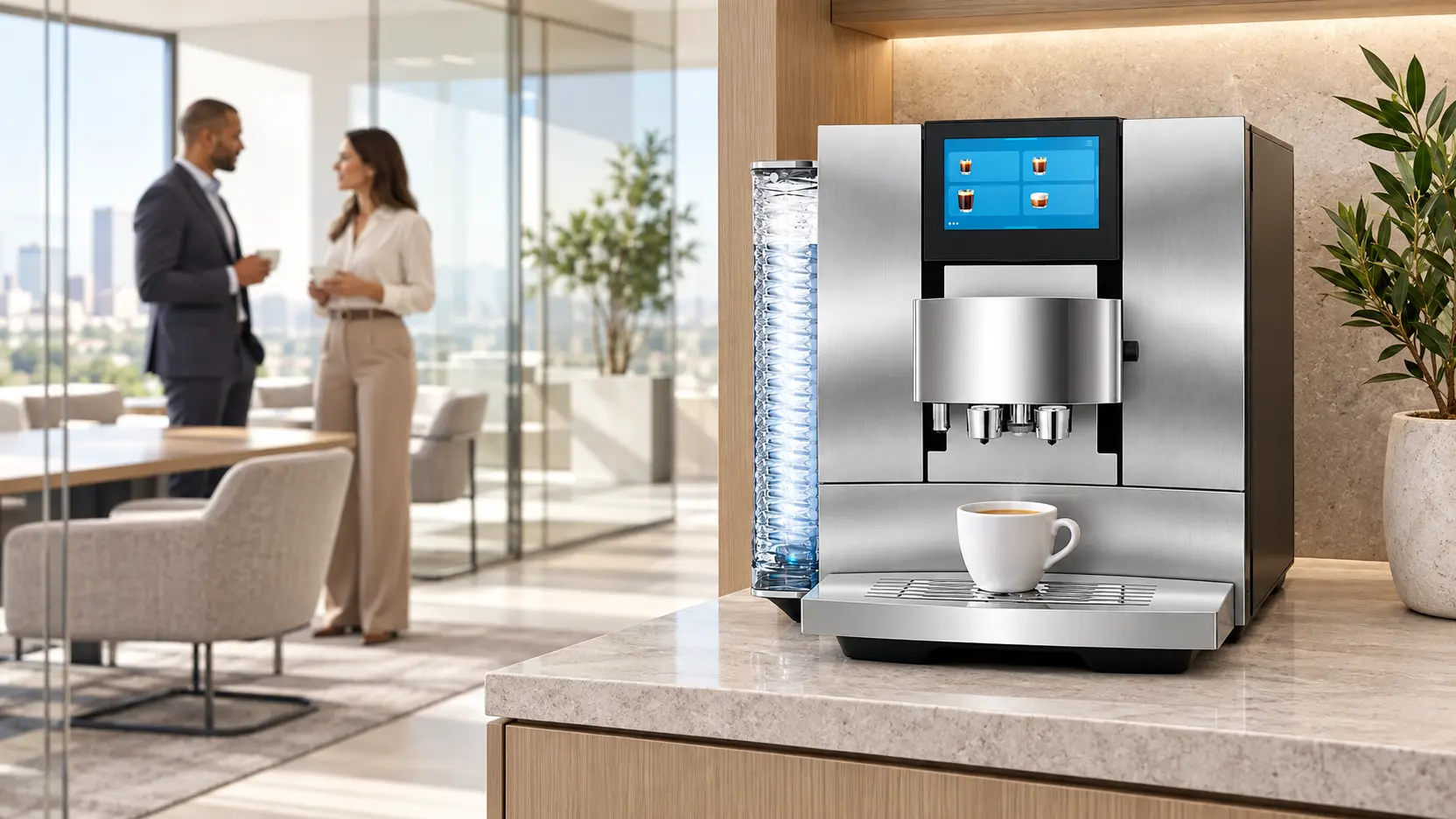
A configurable menu can be useful when it supports the drinks and cup sizes you actually intend to offer. Ask the supplier to demonstrate that exact menu on the proposed professional equipment rather than showing a broad selection of unrelated specialties. Confirm which options are included in the offer and which need separate configuration. Installation, intended use, and the service arrangement still require their own review before the purchase is approved.
Plan the handoff to the guest
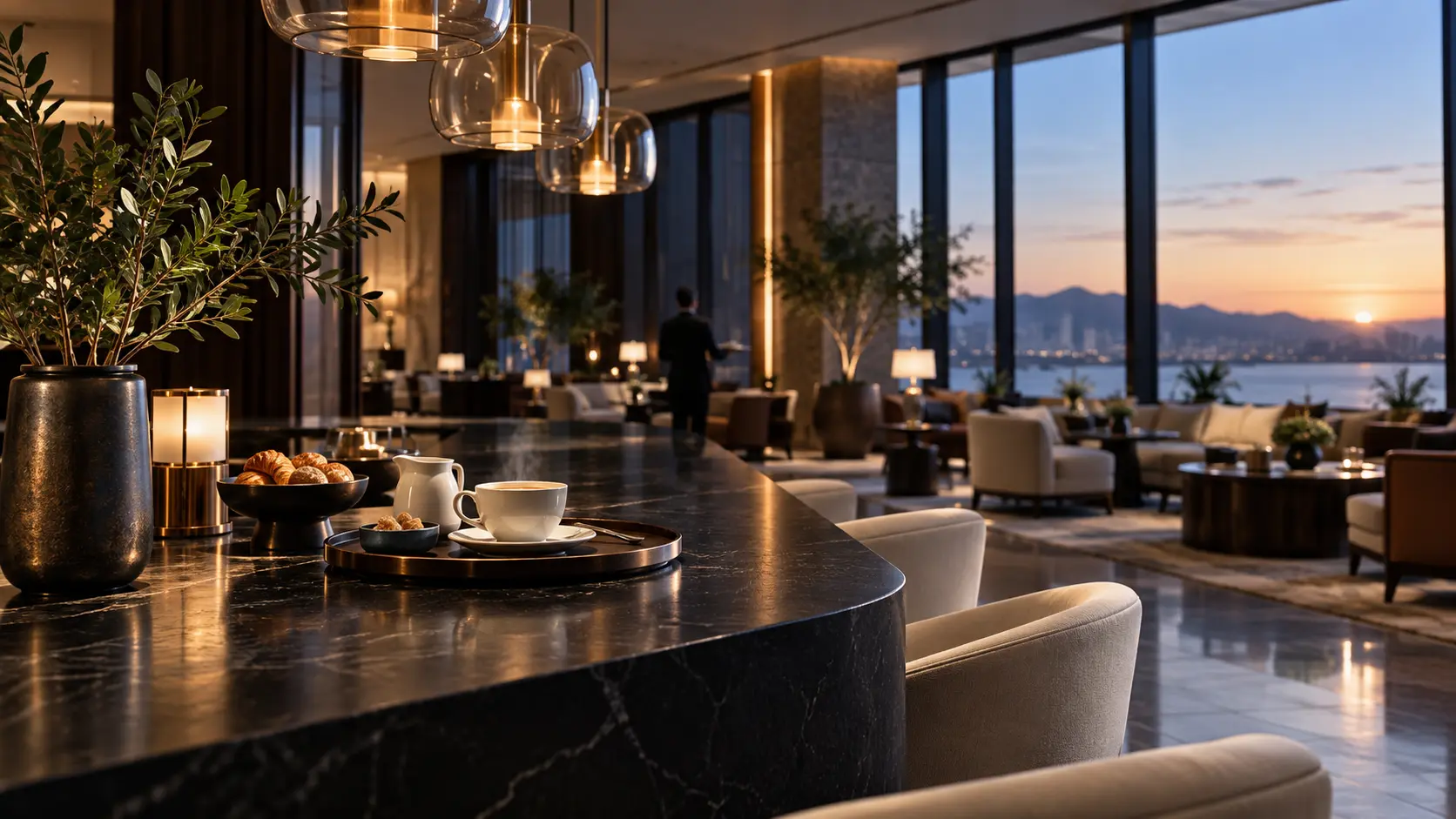
Decide whether drinks will be carried to a consultation table or collected by visitors. For staff service, provide a suitable preparation and collection area so finished cups do not sit among paperwork, keys or display materials. If visitors serve themselves, make the path and instructions clear, and ensure a staff member can assist when needed.
Test the route with the team during a realistic appointment. Observe where a host loses sight of the visitor, whether carrying drinks interrupts a product demonstration and where used cups accumulate. Adjust the service point or the timing of the offer before assuming that a larger machine will solve the problem.
Give station work an owner
Name an opening owner, a replenishment owner during appointments and a closing owner. In a small team, one person can hold more than one role, but the work should still appear on the shift plan. Keep replacement cups, beans and required care supplies in known locations. Specify who orders stock and what level triggers a reorder.
Create a simple response for an unavailable station. Staff should know what alternative can be offered and how to report the fault. Do not let an equipment problem consume a whole customer appointment. Record the issue and pass it to the responsible person, including the model and displayed message when relevant.
Evaluate hospitality rather than cup volume alone
After launch, ask staff whether the offer is easy to make and whether preparation disrupts the conversation. Track spills, unfinished drinks, supply interruptions and repeated guest questions. These observations can reveal an oversized cup, an unclear menu or a poor collection location. Review the arrangement when opening hours or appointment patterns change, keeping the guest experience and staff workload in the same discussion.
Write the coffee offer into the appointment
Imagine a showroom host greeting two visitors for a design consultation. The host offers the core menu after seating them, records both choices, and gives the order to the agreed station owner. The visitor never needs to repeat a request, and the consultant can begin the meeting while preparation continues. This is a service sequence to test, not a requirement for additional staff.
In a smaller team, the same person may host and prepare. Rehearse that version honestly: explain the short pause, keep the visitor comfortable, and choose a menu that fits the interruption. If the station is too far away, consider changing when the offer is made or how cups are collected. A more elaborate drink offer is worthwhile only if the appointment still feels attentive.
Keep the station aligned with the showroom presentation
Review the coffee area from the visitor’s seat as well as from behind the counter. Check where packaging, used cups, wipes, and spare ingredients are visible. Provide practical storage rather than expecting staff to hide routine supplies elsewhere during every appointment. The visual standard should be achievable on a normal working day, including when several appointments overlap.
Use a short weekly review with the people who host visitors. Ask which drink requests are repeated, where cups are abandoned, and whether the offer arrives too early or too late. Treat unfinished drinks as a question to investigate, not proof of poor taste: cup size, appointment timing, or a guest’s change of plans may explain them. Adjust one part of the service and observe the result.
Useful answers, before you decide.
Do we need a large menu to feel premium?
A small, well-executed menu can fit a showroom particularly well. Premium service comes from clear choices, a considered presentation, and reliable timing. Add variety when visitors request it often enough and the team can deliver it without making the appointment feel interrupted or the station cluttered.
What if visitors rarely finish their drinks?
Observe before changing the equipment. Compare cup size, the timing of the offer, appointment length, and which drinks remain unfinished. Ask hosts for specific examples. A smaller serving or a later offer may be more useful than introducing extra recipes or assuming the beans are the problem.
Research notes and sources
These references informed this guide. Manufacturer instructions and final purchase terms take precedence.
- Franke official product information
 Workplace · 5 min
 Workplace · 5 min
 Workplace · 5 min