
The short answer.
Estimate demand from actual attendance, then compare it with observation.
Record synchronized demand separately from the daily total.
Translate competing preferences into testable menu and workflow requirements.
Start with decisions the survey can change
A useful office coffee survey produces a purchasing brief, not a popularity contest. Before sending it, identify the decisions you actually control: the drinks offered, the station location, the service hours and the spending allowance. Tell colleagues whether the survey concerns a replacement machine or a new service. Otherwise, people may answer about an ideal café experience when the real decision concerns a modest staff kitchen.
Keep the questionnaire short enough to complete between tasks. Ask about a typical week and state the reference period. Separate respondents who regularly attend the office from occasional visitors, without asking for unnecessary personal information. An enthusiastic response from a remote colleague should not count as five days of on-site demand.
Ask about behavior before preferences
Begin with days on site, usual coffee times and the number of drinks someone typically takes at work. Then ask which drink they choose most often and which alternatives they would actually use. Include decaffeinated coffee and a no-coffee option so the results describe the whole workforce. Ask whether current users bring drinks from outside because of taste, waiting or simple habit.
Use choices with an optional comment field. A question such as “What prevents you using the current station?” is more useful than asking whether people want better coffee. Separate milk preferences from drink preferences. This helps identify whether a long requested menu represents many regular customers or a few occasional choices.
Check responses against a real working week
Observe the existing station during representative busy periods. Record arrivals, completed drinks, abandoned queues and interruptions for replenishment. Do not attach names to observations. Compare these counts with survey estimates, meeting schedules and office attendance. The aim is to find demand patterns, not to prove that respondents remembered every cup correctly.
Look particularly closely at synchronized breaks. An office with moderate daily consumption can still have a difficult queue after an all-hands meeting. Record the size and duration of these bursts separately from the daily total. Note whether guests share the station and whether another nearby station absorbs demand.
Translate findings into a practical brief
List the core menu, the busiest observed window, the expected opening hours and the person responsible for care. Describe the acceptable experience in observable terms: where users queue, how they find decaf, and what happens when ingredients run low. Bring this brief to demonstrations and ask suppliers to test the actual drink mix.
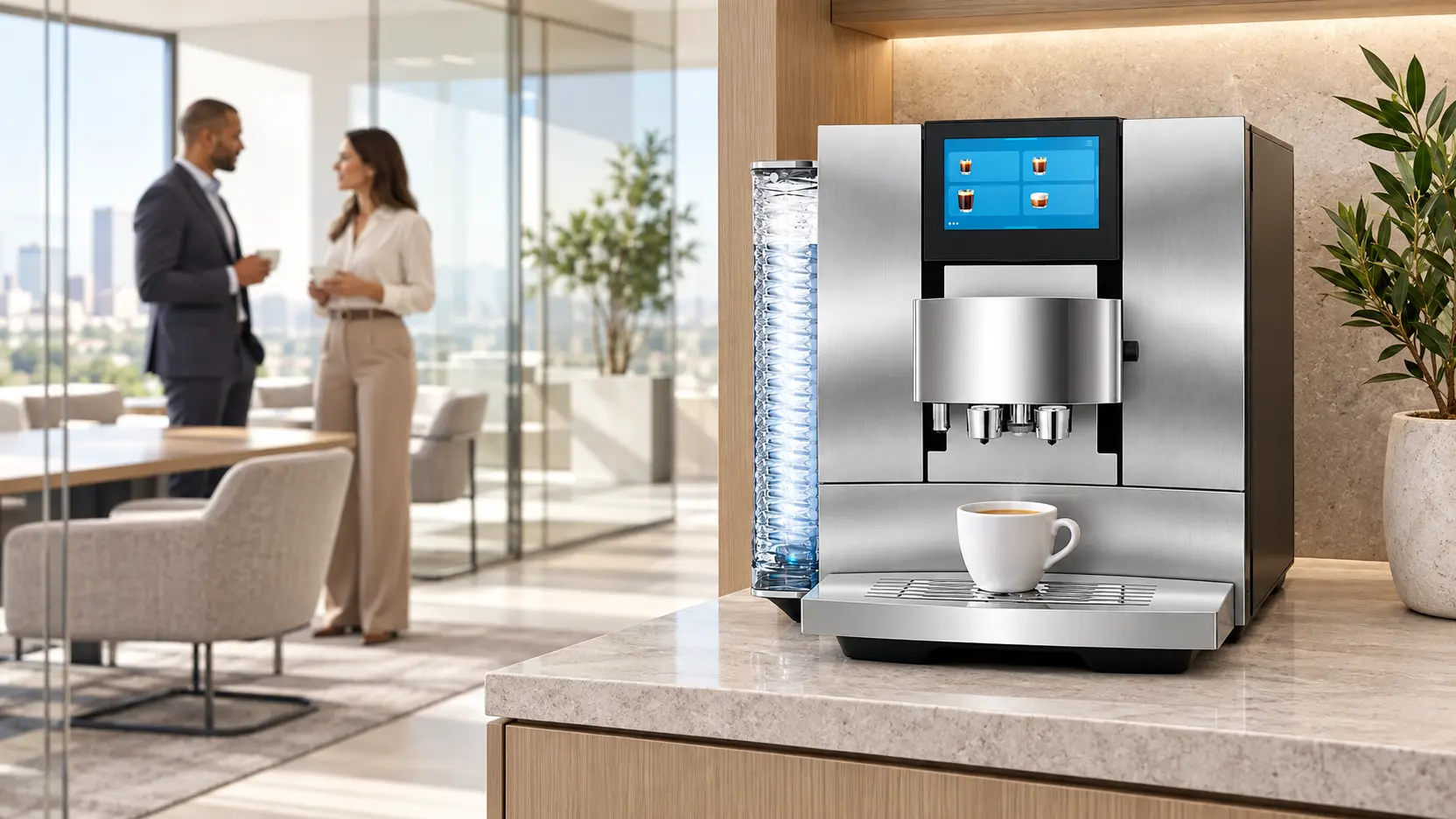
Treat menu configuration as a separate part of the equipment brief. Ask the supplier to demonstrate the proposed drinks and the controls that ordinary users will see, using the exact professional model under consideration. A feature list alone does not establish that a particular configuration suits your office. Confirm intended use, installation requirements, and support separately, and record the agreed menu so the delivered station can be checked against the plan.
Close the feedback loop
Share the main findings and explain which requests the first version will address. Give a date for reviewing actual use after launch. Keep the original baseline so later decisions can distinguish a genuine change in demand from a temporary burst of interest. Assign one owner to collect operational feedback, rather than letting every informal complaint trigger a recipe or settings change.
Turn survey answers into a demand range
Consider an illustrative office with 60 employees, where 36 people are usually present on the busiest day. Suppose 24 regular coffee users report two workplace drinks and another six report one. That produces a starting estimate of 54 drinks, before visitors. It is a planning assumption, not a measured total or a machine specification. Keep the attendance assumption beside the calculation so colleagues can challenge it.
Now compare that estimate with a week of station observations. If the busiest morning window attracts 18 people together, record that burst separately. Do not divide 54 drinks across eight hours and conclude that demand is evenly distributed. A useful purchase brief includes both the provisional daily range and the observed busy window, plus the confidence you have in each number.
Handle conflicting responses without averaging away the problem
Survey comments often contain apparently opposing requests: a broader menu and a simpler station, or stronger coffee and gentler drinks. Group comments by the task they describe. A user who wants a cappuccino and a user who wants fewer buttons may both be served by a short, clearly labeled menu. Preserve uncommon needs when they affect access, ingredient information, or decaf identification.
Before issuing the final brief, invite a small mix of frequent, occasional, and nonusers to review the interpretation. Ask whether you understood the barriers, rather than whether they approve a particular machine. Publish a short note describing what will change, what remains undecided, and what evidence will settle it. This makes the survey a visible part of the decision instead of a forgotten questionnaire.
Useful answers, before you decide.
How many questions should the survey contain?
Use only questions that can change a purchasing or operating decision. A compact survey can cover attendance, drink frequency, preferred drink, timing, and current barriers, with one optional comment. Test it with a few colleagues before circulation; remove any question they interpret differently from what you intended.
What if the office has no existing coffee station?
Use attendance and self-reported behavior to create an initial range, clearly labeled as an estimate. Observe comparable refreshment breaks and include visitors or meetings. A supplier demonstration or small pilot should then test the proposed workflow before you commit to a full rollout.
Research notes and sources
These references informed this guide. Manufacturer instructions and final purchase terms take precedence.
- Franke official product information
 Workplace · 5 min
 Workplace · 5 min
 Workplace · 5 min