
The short answer.
Define availability, charging, and assistance before choosing the station layout.
Test departure and arrival journeys separately.
Assign a shift owner and a clear guest alternative during interruptions.
Define the lobby promise
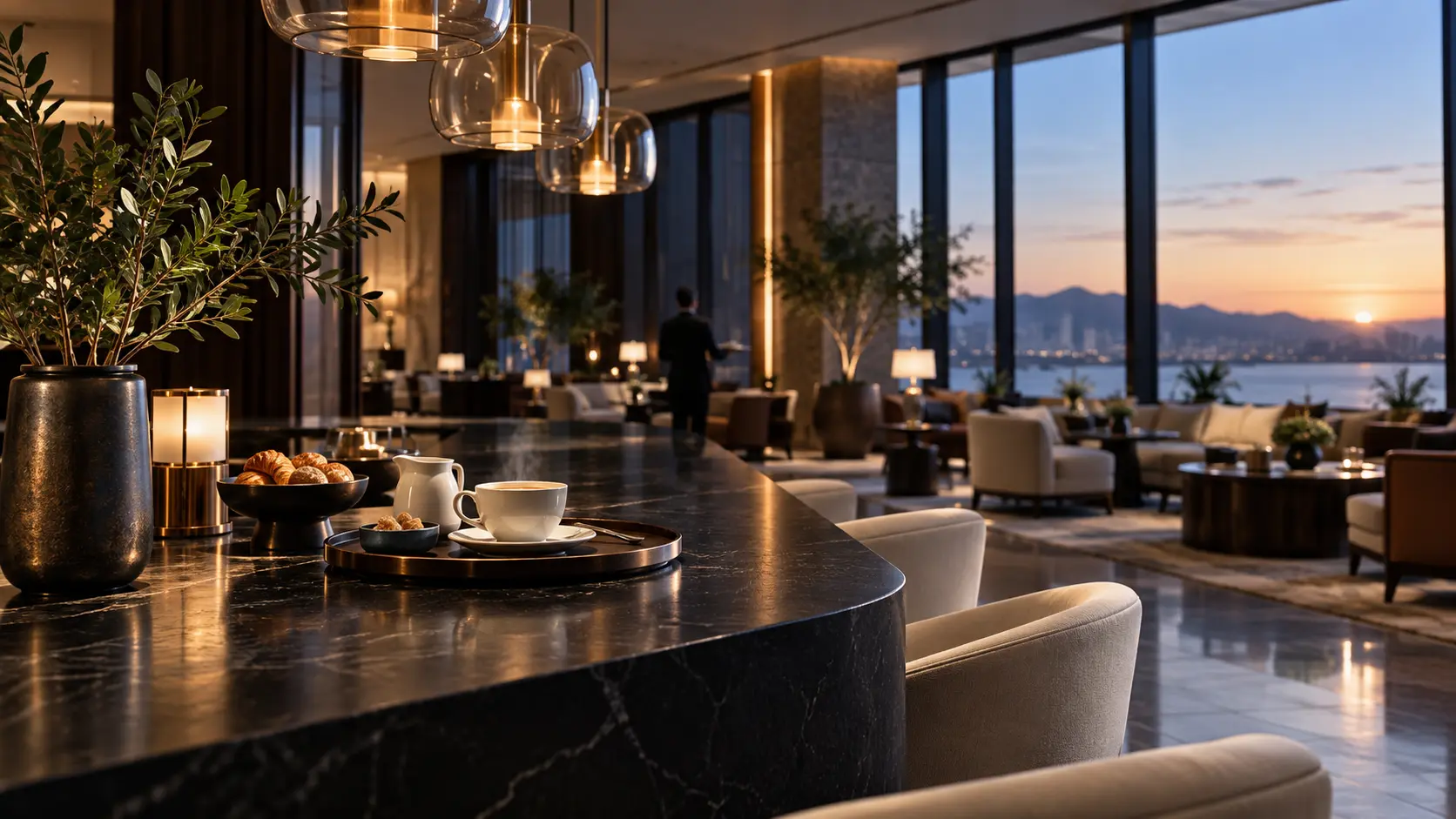
Begin by stating when lobby coffee is available, who can use it and whether it is complimentary or charged. Guests should learn these details before choosing a drink. A lobby station may serve early departures, waiting arrivals and meeting visitors at different times, so a single daily average can hide the service windows that require the most attention.
Decide whether staff will serve drinks or guests will use the equipment themselves. This affects station placement, menu wording and the time reception must reserve for assistance. Avoid allowing the arrangement to change informally by shift: guests should not receive conflicting instructions simply because a different receptionist is working.
Fit coffee into the arrival journey
Position the station so a guest can find it without standing in the check-in line. Consider luggage, nearby seating and the route from the entrance. Guests carrying several bags need a clear place to pause; they should not have to balance belongings on the preparation surface. Keep the queue from expanding into reception transactions.
Choose cups for the actual service promise, including whether guests will carry drinks away. Check the selected cups during commissioning and keep the relevant supplies together. Place simple menu and service-hour information at eye level. If several languages are useful, prioritize clear drink names and consistent symbols rather than fitting a long explanation onto one sign.
Make the menu easy to understand
Offer a concise core menu with recognizable names. Explain whether a drink contains milk and tell guests where to ask ingredient questions. Staff should use the approved ingredient information and avoid guessing about suitability for a guest. If a requested option cannot be served through the installed setup, explain the available alternative clearly.
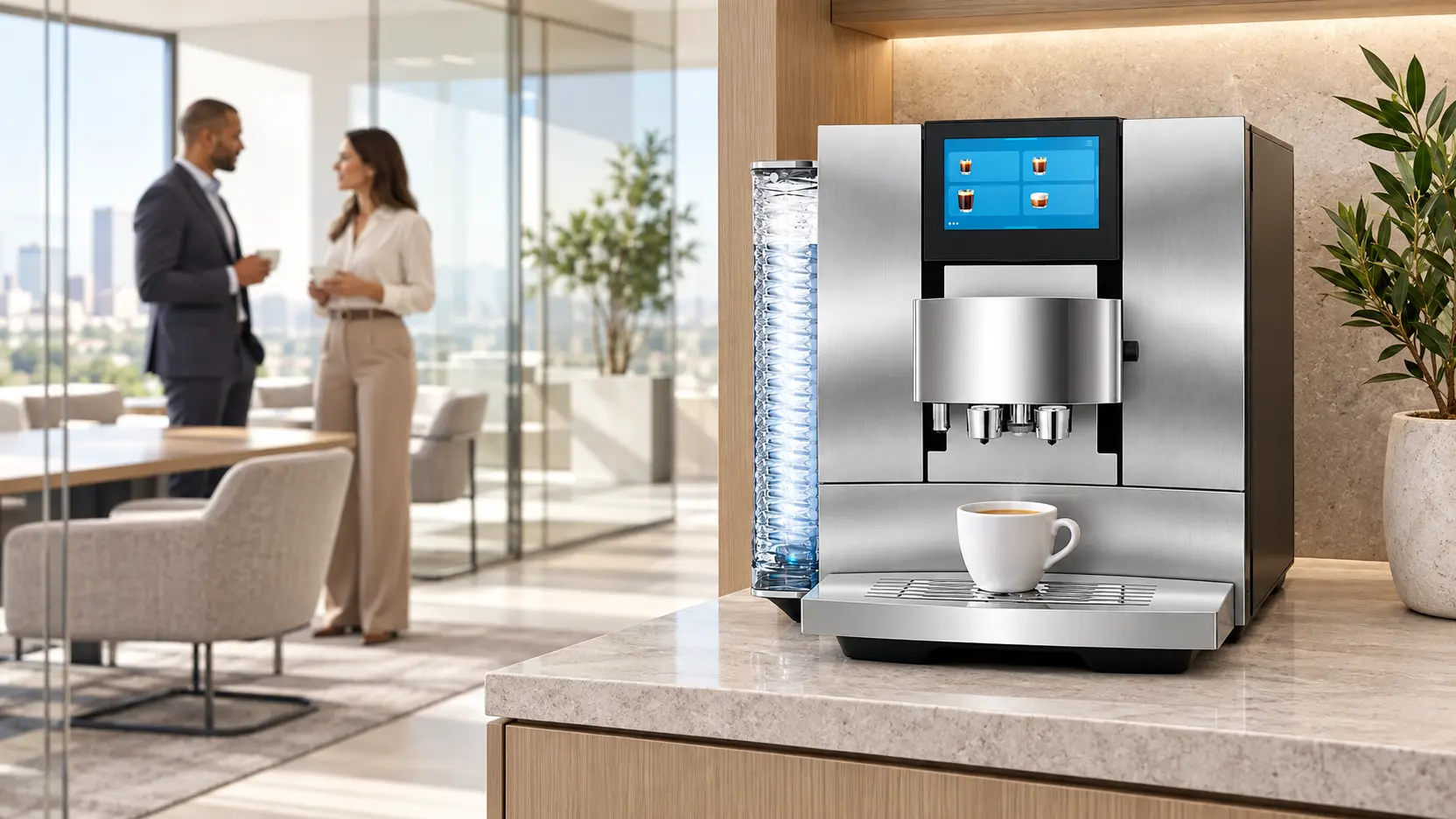
If the proposed professional machine offers guided self-service or outlet adjustments, test those features during a realistic lobby trial. Use first-time testers who have not watched the supplier’s demonstration. Observe where they hesitate, how they select a cup, and whether they understand when dispensing has finished. The useful evidence is an understandable complete interaction in the intended location, rather than the mere presence of an interface feature on a specification sheet.
Assign ownership across departments
Write a responsibility map covering reception, food and beverage staff, housekeeping and engineering, as applicable. One role should own the station at every service period. Separate routine replenishment from machine care, troubleshooting and ingredient decisions. A list of departments is not sufficient unless a named shift role knows it must act.
Use a short station log for low stock, care completion and unresolved faults. Record symptoms in plain language, including any displayed message. Establish who can pause service and how guests will be informed. Front-desk staff need a usable alternative to offer if the station is unavailable, even if that alternative is a different staffed location.
Measure the guest experience
Review the morning departure period and the main arrival period separately. Track guest questions, assistance requests, supply interruptions and time spent by staff. A station can appear tidy while repeatedly pulling reception away from check-in. Use these observations to adjust the layout, menu and replenishment schedule. Retain the agreed service promise in staff induction so the workflow survives personnel changes.
Build a lobby scenario rather than a generic capacity target
Take a hotel where departures are concentrated early and arrivals build later in the afternoon. The morning station may need clear takeaway supplies and quick instructions; the afternoon service may favor seated guests with more time to choose. Map those two journeys independently. An unchanged machine can still need different staffing, replenishment quantities, and presentation at each period.
Rehearse the early service with someone carrying a small bag and another person asking reception a question. Observe whether the coffee queue interrupts either interaction. Then repeat with a family waiting for a room. These practical scenarios reveal furniture and collection problems that a photograph of an empty lobby misses. Adjust the arrangement before deciding that menu variety is the main issue.
Use a handover that protects the guest promise
A useful lobby handover identifies which drinks are available, the remaining supplies, the next care task, and the person responsible until the following shift. If the station is temporarily closed, record the alternative guests should be offered. Place the guest-facing explanation where people approach the station, not only in a staff log behind reception.
Review recurring guest questions as a design signal. Repeated requests for the price may mean the complimentary policy is unclear. Guests selecting the wrong cup may need a better cup display. If reception repeatedly assists with the same screen, review the menu with the equipment provider. Improve the specific point of confusion instead of adding a growing wall of instructions.
Useful answers, before you decide.
Should lobby coffee be self-service or served by staff?
Choose according to the hospitality promise and staffing available at the actual service times. Test both the guest interaction and the work required behind it. If reception staff must repeatedly abandon check-in to help, the layout, instructions, service model, or staffing arrangement needs review.
What should we do when guests ask about ingredients?
Maintain accurate ingredient information for the drinks actually offered, and show staff where to find it. Follow the hotel’s established food handling and allergen procedures. Staff should explain what is documented and seek clarification when uncertain, rather than make assurances based on a familiar drink name.
Research notes and sources
These references informed this guide. Manufacturer instructions and final purchase terms take precedence.
- Franke official product information
 Workplace · 5 min
 Workplace · 5 min
 Workplace · 5 min