
The short answer.
Review the entire journey with a range of users.
Describe specific barriers and assign each to an appropriate owner.
Recheck the layout after routine stock, furniture, or menu changes.
Observe the complete user journey
A coffee station works best when people can understand and use the entire arrangement, not just its main control. Walk through approaching the counter, selecting a cup, reading the menu, making a drink, collecting additions, disposing of waste, and leaving. Include people with different heights, mobility, reach, vision, and dexterity when reviewing the experience.
Ask participants where they need help or must adopt an awkward posture. Do not assume one volunteer represents every user. Separate difficulties caused by furniture, lighting, signs, accessories, and equipment. This practical review can identify improvements, but it does not establish compliance with accessibility requirements; have applicable requirements assessed by a qualified person.
Reduce unnecessary reach and handling
Keep frequently used items within comfortable reach for the people using the station. Avoid placing cups behind the machine or requiring someone to reach across a dispensing area for lids. Consider how a user will steady a cup, select a drink, and collect it. Leave a clear place to set down personal items without obstructing others.
Review the weight and grip of containers staff refill or empty. A layout that looks tidy from the front may require awkward lifting from a deep cupboard. Bring a sample replenishment pack to the design review and rehearse the task without operating the machine. Ask facilities to assess proposed furniture changes and handling arrangements.
Make choices understandable
Use familiar drink names, a manageable launch menu, and readable labels with clear contrast. Show which cups go with which drinks when sizes differ. Keep instructions close to the relevant action and remove outdated signs. A crowded noticeboard can hide the one instruction someone needs while carrying a hot drink.
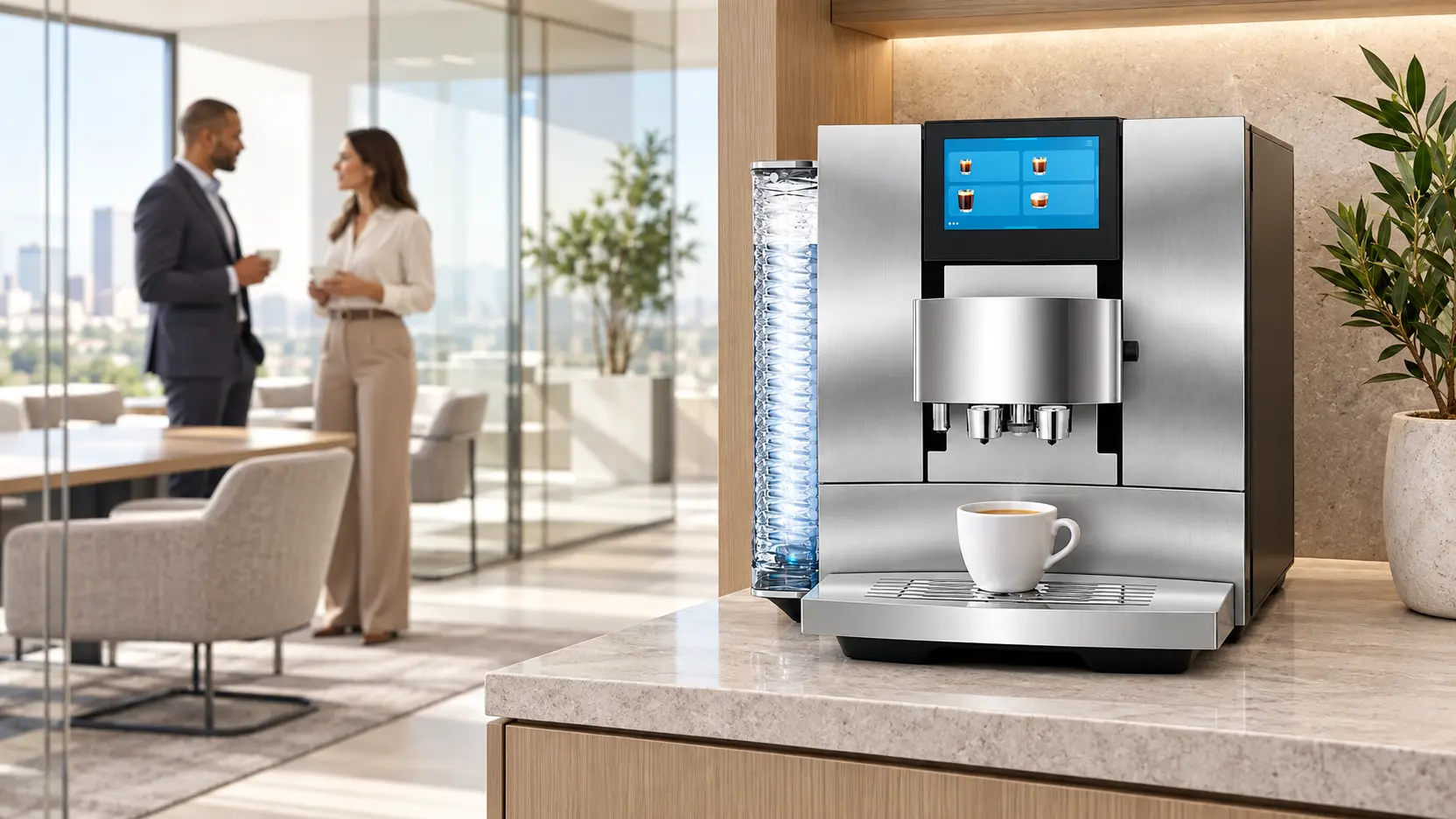
Check the actual screen under the room’s lighting and from different user positions. Where the proposed model provides guided steps or an adjustable outlet, demonstrate those functions with the intended users rather than relying on a feature description. Watch cup placement, reach, selection, and the indication that dispensing has ended. A feature list alone cannot establish that a particular person can independently use the installed station in its real surroundings.
Design for queues and assistance
Watch how people pass each other while choosing ingredients, waiting for drinks, and leaving. Place additions where they do not require returning through the queue if the room permits. Keep circulation and approach space clear, and ask the relevant facilities or accessibility specialist to assess dimensions and applicable requirements rather than relying on an improvised rule.
Provide an easy way to request assistance without making the user explain a personal condition. Brief nearby staff on helping respectfully and asking what is useful. An alternative service option should be practical during the station’s operating hours, not a sign directing people to an unstaffed desk on another floor.
Include the people who maintain it
Review replenishment, waste removal, wiping, and scheduled care with the actual operators. They need access to the parts specified in the machine instructions and suitable space for care supplies. Repeat the user review after installation because cup racks, bins, and signs often move during setup. Assign ownership so temporary clutter does not undo the improvements.
- Invite a range of users and record specific barriers.
- Test reach, readability, cup handling, and the exit route.
- Arrange qualified assessment of applicable accessibility requirements.
- Recheck the layout when equipment, furniture, or the menu changes.
Run a respectful task-based user review
Invite participants to try a short sequence: approach the station, find an appropriate cup, read the options, select a drink, and leave with it. Ask what would make the task easier rather than asking them to explain personal medical details. Let people describe their own experience and accept that one adjustment may help one user while leaving a different barrier unresolved for another.
Record observations as concrete design questions. “The cup labels are difficult to read from this position” suggests a different next step from “the machine is inaccessible.” Separate furniture, lighting, menu, and assistance issues, then assign each to someone who can assess it. Use a qualified review for applicable accessibility requirements; an informal user trial supports design but does not certify compliance.
Watch for barriers introduced after installation
A station can become harder to use when a delivery box occupies the approach, spare cups migrate above the machine, or a promotional sign blocks the menu. Include these everyday changes in the station owner’s review. Photograph the agreed arrangement for internal reference, while keeping personal information out of the image. The reference should explain where items belong, not replace ongoing observation.
Give users a simple way to report difficulty and request assistance during the stated service hours. Review the arrangement after a new cup, menu, accessory, or furniture change. Small changes can alter reach and handling even when the main equipment remains the same. Ask the people who refill and clean the station to participate too, because their working needs can otherwise be overlooked behind a polished front view.
Useful answers, before you decide.
Can we choose a machine based on its touchscreen alone?
The screen is only one part of the experience. Cup placement, reach, visibility, menu wording, ingredient collection, and the exit route also matter. Test the proposed installed arrangement with users and ask a qualified person to assess applicable accessibility requirements rather than relying on a single advertised feature.
How should staff offer help?
Make assistance easy to request and ask what would be useful before acting. Avoid assumptions about a person’s ability or preferred method. Ensure the assistance arrangement is actually available during service hours, and use feedback to improve the station itself rather than treating help as the only answer to repeated barriers.
Research notes and sources
These references informed this guide. Manufacturer instructions and final purchase terms take precedence.
- Franke A600 commercial coffee machine
 Workplace · 5 min
 Workplace · 5 min
 Workplace · 5 min