
The short answer.
Arrange the station in the order of preparation and cleanup.
Give every visible accessory a recurring purpose.
Design a quick reset that another household member can understand.
Design for a used kitchen
A coffee station is most convincing when it looks good during ordinary use, not only after every object has been removed for a photograph. Begin with the machine and the actions around it: filling, selecting, serving, emptying, and cleaning. Give each action enough space and a clear destination.
A calm arrangement does not require hiding every supporting item. A few useful cups and a compatible milk container can belong naturally in the design. Clutter usually comes from items without a purpose or a place, not from evidence that someone enjoys making coffee.
Create a short sequence
Arrange the station in the order you use it. Cups should be easy to reach before selecting a drink. Finishing ingredients should not block the machine while another person waits. Used cups and waste need a route away from clean supplies. In a small kitchen, a few inches of thoughtful placement can be more valuable than another accessory.
Act out the routine with another household member. Watch where hands cross, where a door gets in the way, and where something has to be moved twice. Adjust the layout before purchasing storage organizers that might preserve an awkward arrangement rather than solve it.

Give care supplies a proper home
Keep the correct cleaning and maintenance products identifiable and separate from ingredients. They should be easy for the responsible person to find while remaining stored according to their labels and household needs. Do not decant them into decorative containers that remove instructions or make them resemble food.
Store model information, warranty documents, and a short care note somewhere retrievable. A small digital folder can be more useful than a drawer of mixed papers. Include the exact model and the supplier's support contact so a future question does not begin with a search through old email.
Use accessories with restraint
Choose each accessory for a recurring job. A cooler, warmer, scale, or special storage piece may be useful, but it should earn its footprint. Begin with the necessary setup and observe what feels inconvenient during the first few weeks. Then add the item that solves that specific problem.
Use finishes and materials to create coherence without requiring every object to be from the same collection. The machine can remain the visual anchor while cups and storage reflect the rest of the home. Practical compatibility matters more than a matching appearance for any item that connects to the appliance.
Leave a simple reset routine
Define what ready for tomorrow looks like. It may include a clear serving area, correctly stored milk, care completed as required, and cups in their place. Assign shared responsibilities explicitly rather than hoping the most observant person handles everything.
A station that is easy to reset stays attractive with less effort. The design succeeds when the machine feels inviting on a busy morning and the counter returns to order naturally afterward. That is a more durable kind of luxury than a setup that looks immaculate only when nobody uses it.
Create three quiet zones
Think of the station as preparation, serving, and care. Preparation includes the machine and the items required to make the drink. Serving includes a cup, spoon, and any permitted additions used outside the machine. Care includes the route to empty, rinse, and store the relevant parts. The zones do not need separate pieces of furniture; they need to be understandable without moving objects back and forth unnecessarily.
For a small kitchen, this might mean keeping only the machine and a frequently used cup visible, with care supplies in a nearby designated cabinet. In a larger kitchen, a tray can gather serving items without turning the whole counter into a display. Test the arrangement after making a real drink. If the cleanup leaves objects scattered, the station needs a better return path rather than another decorative accessory.
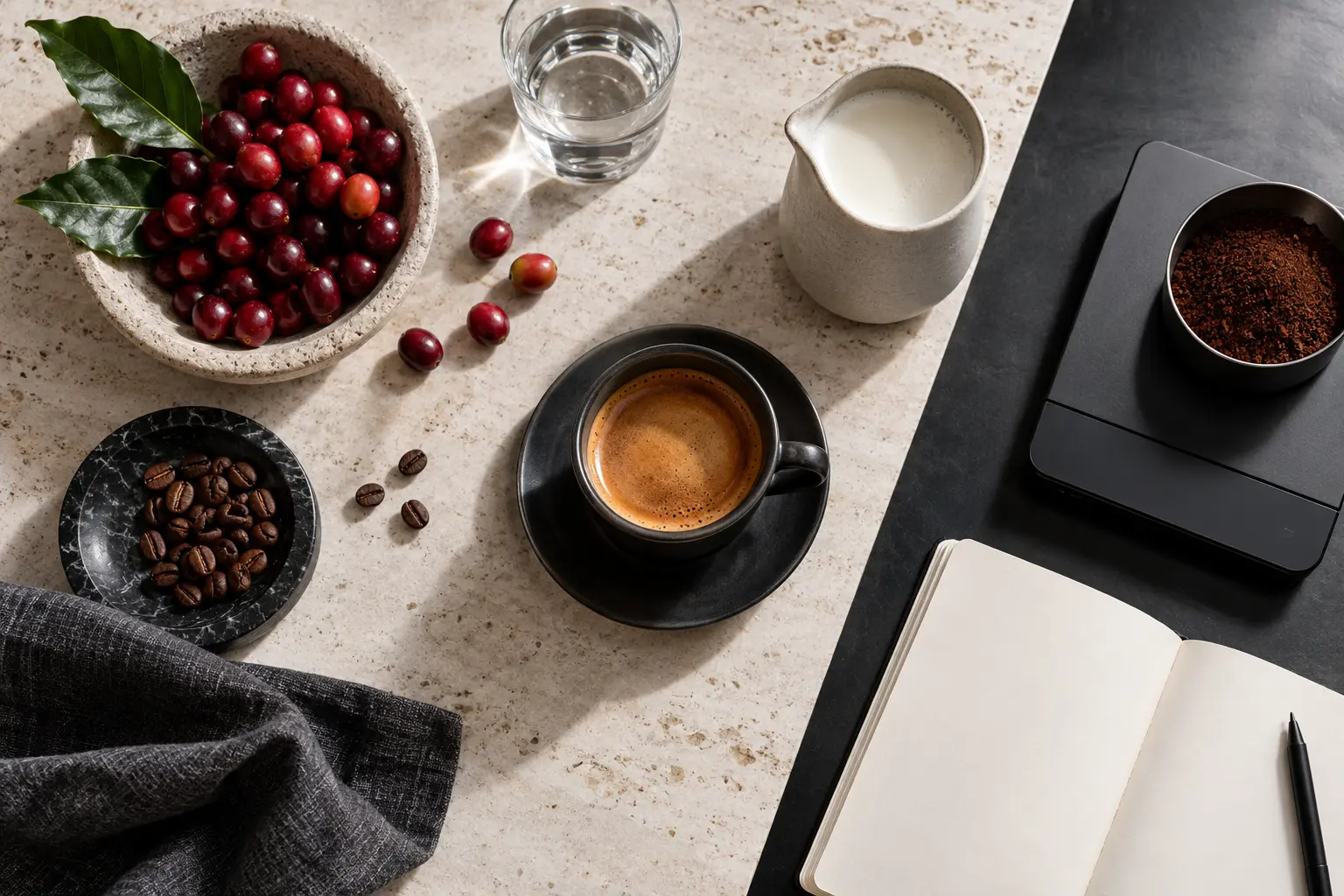
Let the room stay a kitchen
Consider the people doing other tasks nearby. A coffee routine that blocks food preparation or requires reaching across another appliance will feel less calm than the photograph suggests. Keep the machine’s documented access and installation requirements in view, and allow ordinary movement around it. Lighting can make the area pleasant, but it should also let users read controls and notice when cleaning is needed.
Write a short reset sequence that follows the actual equipment instructions: return ingredients appropriately, complete the required care, put tools away, and leave a clear cup position. The sequence should be easy enough for another household member to perform without guessing. A beautiful station is one that returns to a useful state after coffee, rather than one that looks impressive only before anyone touches it.
Useful answers, before you decide.
How many accessories should remain on the counter?
Keep the items that make the normal routine easier and give each a defined place. Store infrequent items nearby when appropriate. The right number depends on use and space, not on copying every object in a styled photograph.
What if the station looks good but always becomes cluttered?
Watch where objects land after a drink and after cleanup. Add a clear return location or simplify the sequence. Repeated clutter often reveals a missing step in the arrangement rather than a need for more storage products.
 Ownership · 5 min
 Ownership · 5 min
 Ownership · 5 min