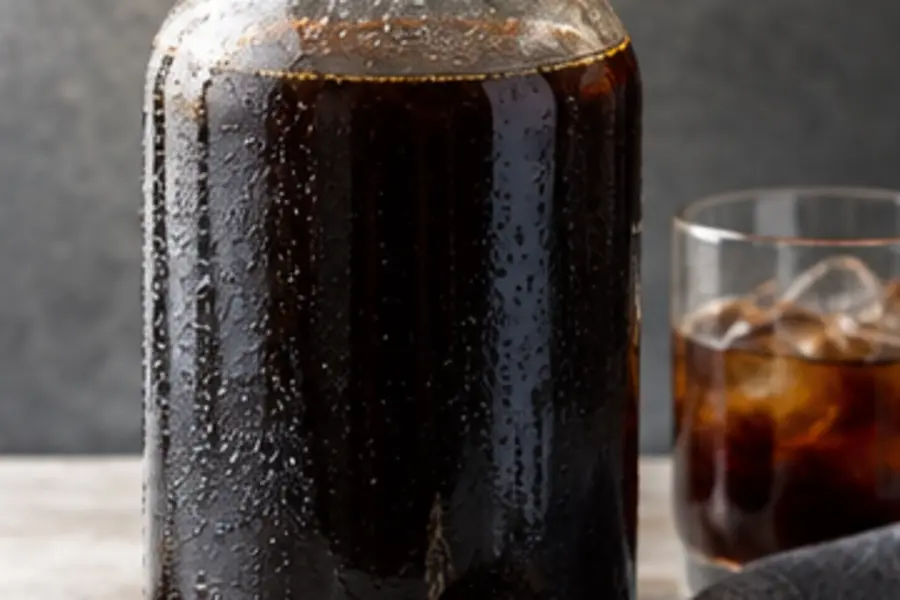
The short answer.
Measure the strained yield rather than expecting all starting water back.
Adjust one serving before changing the whole batch.
Label, cover and refrigerate the prepared coffee.
The idea
A small cold brew batch is easier to experiment with than a large container that lasts through many servings. This recipe makes a moderately strong base that you can dilute after filtering. Refrigerated steeping is convenient when you want the coffee ready for a later drink while keeping preparation separate from serving.
Use a clean container with enough room for the coffee and water, and a filter setup you can handle comfortably. A coarse grind makes straining less cumbersome, though different grinders produce different amounts of fine material.
Ingredients and yield
- Yield: approximately 450–500 ml strained base; allow an overnight steep
- 60 g coarsely ground coffee
- 600 ml cold drinking water
- A clean covered container
- A fine sieve and paper coffee filter
- Chilled water or milk for dilution at serving

Make it
Combine the grounds and water in the container. Stir until all the coffee is wet, cover, and refrigerate overnight, beginning with a steep of roughly twelve hours as an experiment. The goal is a usable starting recipe, not a claim that one duration suits every coffee.
Strain through a fine sieve into a clean vessel, then pass the liquid through a paper coffee filter for a clearer result. Let gravity do the work rather than squeezing the grounds through the paper. Cover the filtered coffee and keep it refrigerated. Some water remains in the grounds, so the final volume will be lower than the starting volume.
Make it your own
For a first serving, combine two parts cold brew with one part chilled water and taste over ice. Add more water if desired. For a milk drink, begin with equal parts base and cold milk, then adjust. Label the container with the preparation date, make small batches, and follow suitable food-storage guidance for your ingredients and handling conditions.
To compare coffees, change only the beans initially. If you also change grind, steep duration, and dilution, it becomes hard to know what caused the difference. Hario's cold brew guidance illustrates the general steep-and-filter approach; this recipe's ratio and serving suggestions are original. Keep the base plain. Fruit, sweeteners, dairy, and spices can be added individually when serving, which preserves flexibility and avoids committing the entire batch to a flavor you may tire of.

Set up a useful cold brew experiment
Choose one clean container, one coffee and one starting steep for your first batch. After straining, measure the actual yield and make a small serving at the suggested dilution. Taste that serving before adjusting the entire container. A batch that seems too strong straight from the refrigerator may be perfectly useful once diluted; changing the steep immediately would answer a different question from the one in front of you.
On the next batch, change only one item that you can describe clearly. For example, keep the coffee amount and water unchanged while adjusting the steep duration, or keep the preparation identical and try a different serving dilution. Record the start time, strain time and finished volume. These notes are especially useful when a filter holds back more liquid than expected and the apparent yield changes without a corresponding change in coffee strength.
Arrange the straining setup before taking the container from the refrigerator. A stable sieve over a sufficiently large vessel makes the process easier, and a separate paper-filter stage gives you control over clarity. Let the liquid drain at its own pace. Pressing damp grounds forcefully is not a reliable way to improve the flavor or make the final serving consistent.
Useful answers, before you decide.
Is this a concentrate?
Treat it as a base to taste and dilute, rather than assuming a standardized concentrate strength. Your coffee, grind and straining affect the result. The suggested serving proportions provide a starting point for your own preference.
Why does filtering take longer than expected?
Fine particles can slow a paper filter. Strain through the sieve first and let the paper stage drain without squeezing. Record the grind used so you can make a deliberate adjustment in a later batch.
Research notes and sources
These references informed this guide. Manufacturer instructions and final purchase terms take precedence.
- Hario: Cold brew methods
 Recipes · 4 min
 Recipes · 4 min
 Recipes · 4 min