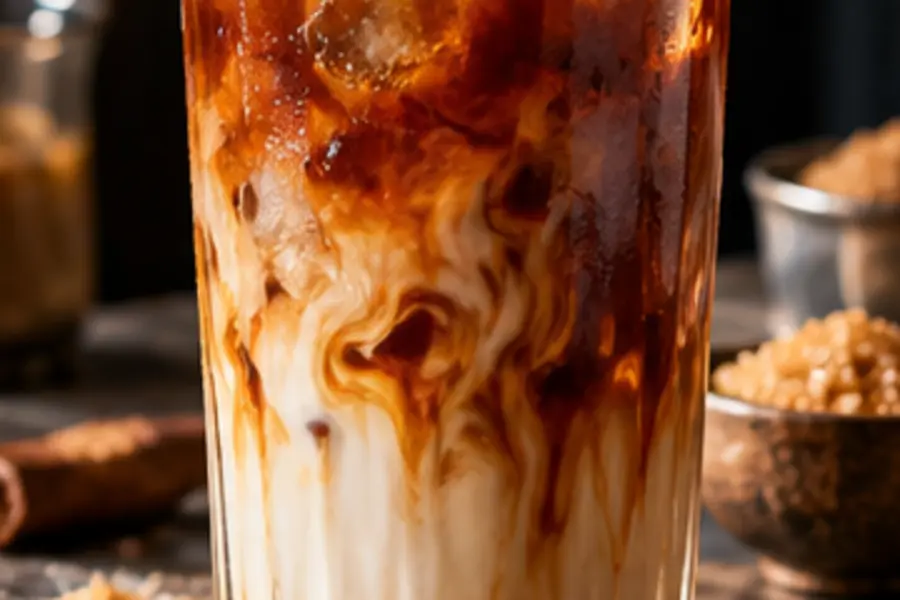
The short answer.
Cool the coffee before closing it inside a shaker.
Dissolve brown sugar fully before the drink becomes cold.
Use fresh serving ice and stir the layers before drinking.
The idea
Shaking coffee with ice creates a different experience from simply pouring espresso over cubes. The coffee becomes thoroughly chilled, a light froth forms at the surface, and the final splash of milk can be kept small. Brown sugar adds a mellow sweetness that is easy to adjust.
Use a shaker or other container specifically suitable for the job. The coffee should be cooled before it is sealed inside. If you do not have a suitable shaker, vigorous stirring over ice still makes a good drink, just with less foam.
Ingredients and yield
- Yield: one drink; allow about 10 minutes
- 50 ml espresso, cooled
- 2 teaspoons brown sugar
- 2 teaspoons hot water
- 60 ml cold milk or oat drink
- Ice for shaking and a fresh glass
- Optional: a tiny pinch of cinnamon

Make it
Dissolve the brown sugar in the measured hot water in an open cup. Add the espresso and optional cinnamon, stir, and allow the mixture to cool. Put ice into your shaker only once the coffee is no longer hot. Pour in the coffee, close the shaker according to its instructions, and shake until the outside feels cold.
Fill a serving glass with fresh ice and strain the shaken coffee over it. Pour the cold milk slowly down the side of the glass. You can leave the layers visible for a moment, then stir before drinking so the first sip is not simply milk or strong coffee.
Make it your own
Fresh serving ice helps keep the drink cold after the shaking ice has done its work. The quantity of meltwater will vary with the size and temperature of your cubes, so taste before adding any extra water. If the result seems thin, shorten the next shake or use a slightly larger espresso portion.
For a dairy-free version, use an oat drink you enjoy cold. Because it is not heated here, its flavor straight from the carton is especially relevant. Keep milk refrigerated until pouring and return the carton promptly. All syrup and spice are mixed in a cup, outside the coffee machine. This recipe is easiest to repeat if you use the same glass and ice size each time; the amount of ice is a meaningful part of the balance, even though it is not a flavoring.

Control the shake instead of chasing more foam
Use the same shaker, ice and serving glass for your first few attempts. Note how long you shake and whether the strained drink tastes balanced before adding milk. A longer shake is not automatically better: its effect depends on the ice and the starting temperature of the coffee. Once the mixture feels properly chilled and aerated, taste the finished drink before deciding that it needs more shaking next time.
Brown sugar should be dissolved before the cold stage. If grains remain at the bottom of the glass, the problem began with the syrup rather than the coffee. Stir the sugar thoroughly in the measured hot water, combine with the espresso and allow that mixture to cool before using the shaker. Keep the optional cinnamon restrained; visible powder can make a pleasantly foamy surface feel gritty if too much is added.
For a two-person tasting, divide a finished coffee batch between two iced glasses and vary only the milk amount. This makes it easier to find your preferred contrast between the shaken coffee and the softer milk layer. Label the proportions in a note rather than relying on a photograph, since layers look different as they merge.
Useful answers, before you decide.
Can I make it without a shaker?
You can stir the cooled coffee and syrup over ice, then add milk. It will have less aeration and a different surface, but the same flavor ingredients still make a useful iced drink.
Why did my drink taste watery?
Look at how much ice melted during shaking and how much additional ice was used. Keep the espresso amount fixed and shorten the next shake slightly before making several changes together.
 Recipes · 4 min
 Recipes · 4 min
 Recipes · 4 min