
The short answer.
Give the tasting one clear question and a small number of samples.
Use familiar language and keep participation comfortable.
Finish with a favorite recipe people can repeat.
Give the tasting one question
A small tasting is easier to enjoy when it has a purpose. You might compare two coffees in the same drink, one coffee in two recipes, or a familiar recipe with a small adjustment. Avoid changing everything at once. Guests should understand what they are comparing without needing a lesson before the first sip.
Choose a modest number of samples and small servings. The event should feel like a conversation, not a test of endurance. Offer water and an easy way to decline or stop. Ask about ingredient preferences in advance without making unsupported health or allergen assurances about shared equipment.
Keep preparation reasonably consistent
Use comparable cups and prepare each sample according to a clear recipe. Record the coffee and settings so you can repeat a favorite afterward. If samples cannot be served at exactly the same moment, acknowledge that temperature and timing may influence impressions.
For a home automatic, choose drinks the machine is documented to make. For manual brewing, use a method you already know rather than learning several techniques in front of guests. The goal is a useful comparison, not a performance in which the host is too occupied to join the discussion.

Ask ordinary questions
Invite observations such as “Which would you choose for breakfast?” or “Which feels more balanced with milk?” These prompts connect the tasting to real preferences. Nobody needs to identify a particular fruit or describe a precise flavor wheel term to participate.
Let people write or think quietly before hearing the loudest opinion. This keeps the conversation from becoming a search for the answer the host seems to want. Differences are useful information. A coffee that one guest finds lively may feel too sharp to another, and both reactions can be honest.
Reveal information at the right moment
If you want to compare without brand or price expectations, label samples A and B and reveal the details afterward. Do not present this as a scientific blind trial; a relaxed home tasting has many uncontrolled factors. It is simply a way to focus attention on the drink first.
After the reveal, explain the recipe and any meaningful differences. Keep manufacturer facts separate from your own impressions. “This model has two grinders” is a product statement; “I prefer this coffee in milk” is a personal result.
Finish with a repeatable favorite
Ask each person which drink they would like again and why. Save the winning recipes rather than declaring a universal winner. Complete the care routine and return milk ingredients to appropriate storage. The best outcome is that guests leave with a clearer sense of what they enjoy—and perhaps one simple recipe they can recreate—without feeling that coffee appreciation requires special language or expensive equipment.
Put it into practice
Prepare a tiny tasting sheet with three prompts: what I noticed, when I would drink it, and whether I would choose it again. Leave room for disagreement and avoid ranking guests' descriptions. At the end, share the actual recipes so a favorite can be repeated. The sheet gives structure to the conversation without turning a relaxed gathering into a vocabulary exercise or a competition.
Plan a tasting around a useful choice
A welcoming tasting might ask which of two coffees the household prefers in its usual milk drink. Another might compare a familiar recipe with one small adjustment. Keep the question narrow enough that guests can remember the samples and explain their preference. A crowded lineup can become tiring and obscure the simple decision you hoped to make.
Prepare the cups in a consistent way and identify them with neutral labels until everyone has offered an initial reaction. Explain the serving size and any ingredients before tasting, including relevant allergens. No one should feel pressured to finish a sample, choose the expensive option, or use specialist vocabulary. Comments such as smoother, more coffee flavor, or easier to enjoy are perfectly useful.
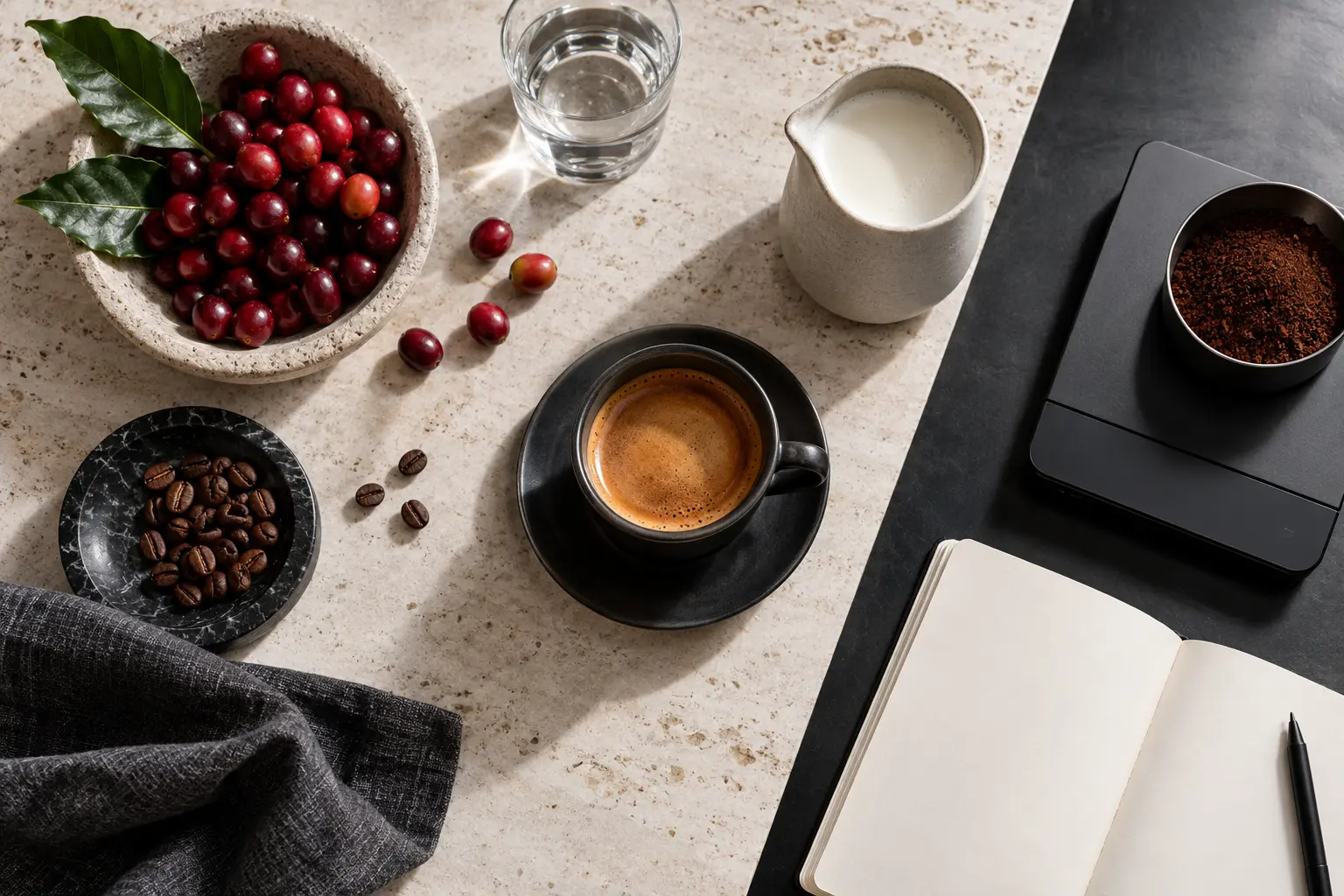
Host the conversation, not a competition
Ask each person what they would happily drink again and in what setting. A guest may prefer one sample alone and another with breakfast. Different answers do not invalidate the tasting; they explain different uses. Reveal the coffee or setting details after the initial discussion so packaging, price, and expectations do not lead the whole conversation.
End by repeating the favored recipe once if practical. Record the coffee, cup, and preparation while the details are still clear. Keep any leftover ingredients in accordance with their own storage guidance and complete the equipment’s prescribed care. The successful outcome is not a universal winner or an impressive score sheet. It is a relaxed shared experience and a more useful understanding of the drinks people actually enjoy.
Useful answers, before you decide.
How many coffees should I include?
Use a small enough set that people can compare comfortably and remember what they tasted. Two focused alternatives are often more useful for a household decision than a large lineup with no clear question.
Should I hide the price until after tasting?
You can reveal price and product details after initial preferences are recorded. This helps the discussion begin with the drink itself, then adds value and purchasing considerations once everyone has described their experience.
 Coffee craft · 5 min
 Coffee craft · 5 min
 Coffee craft · 5 min