The short answer.
Begin with a small pinch of colored zest.
Melt finely chopped chocolate gradually with the hot coffee.
Use a spoon to keep the small serving evenly mixed.
The idea
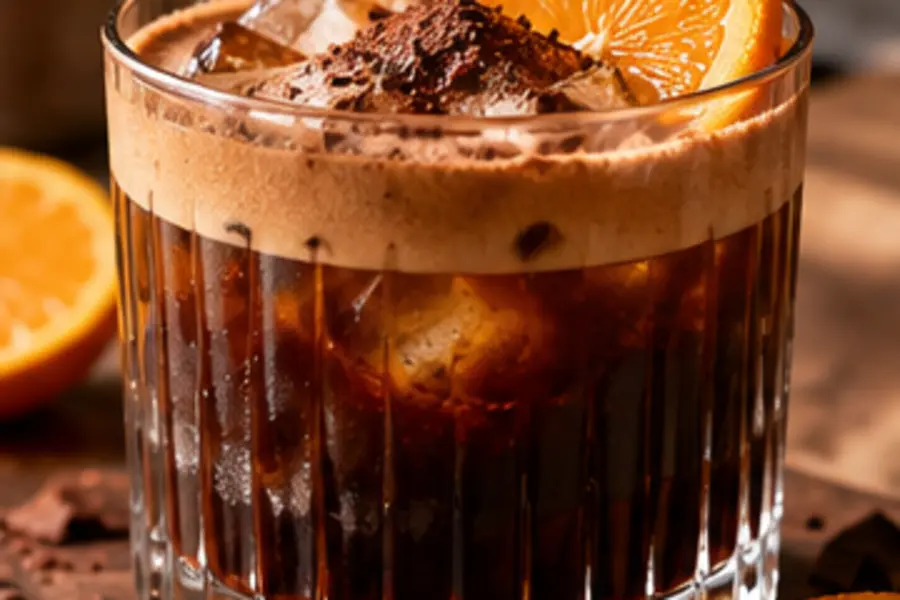
This is a short dessert coffee designed for a few considered sips. A modest amount of dark chocolate melts into espresso, while orange zest adds aroma. It sits somewhere between a flavored espresso and a very small mocha, with no milk required in the base recipe.
Choose chocolate you like eating on its own. Very bitter chocolate makes a more austere cup; sweeter dark chocolate makes it softer. The recipe uses chopped chocolate rather than cocoa so the finished texture is slightly rounder and the preparation stays simple.
Ingredients and yield
- Yield: one small serving; allow about 6 minutes
- 40 ml espresso
- 8 g dark chocolate, finely chopped
- 1 teaspoon hot water
- A small pinch of finely grated orange zest
- Optional: 1 teaspoon sugar
- Optional: 1 tablespoon warm milk for a softer version
Make it
Put the finely chopped chocolate and hot water into a warm espresso cup. Stir to moisten the chocolate, then brew the espresso into a separate vessel. Add a small amount of coffee to the chocolate first and stir firmly until it begins to melt. Pour in the remaining coffee and continue stirring until the mixture looks smooth.
Wash the orange and grate only a little of the colored outer peel directly over the cup. Stir once and taste when comfortable to sip. Add sugar only if your chocolate and espresso combination needs it. If small chocolate pieces remain, give the cup another gentle stir rather than expecting a perfectly clear coffee.
Make it your own
The orange should appear mostly in the aroma. Too much zest can make the drink feel rough or bitter, so begin with less than you think you need. For an even smoother version, infuse a strip of peel in the teaspoon of hot water, then remove it before mixing with the chocolate.
Serve in a small cup with a spoon and perhaps a plain shortbread biscuit. If you want to add warm milk, start with a tablespoon; more will turn this into a different, longer drink. Check the chocolate label when avoiding dairy because some dark chocolate includes milk. Never put chocolate, zest, or sugar into a coffee grinder, water tank, or milk system. The espresso is brewed normally, and all the character of the recipe is built afterward in the cup.
Use orange as an aroma, not a garnish pile
A pinch of zest has much more influence in this small cup than it would in a large dessert. Begin with only a little colored peel, then smell the cup before taking a sip. If orange is the first and only thing you notice, reduce the amount next time. The aim is to make the chocolate and coffee feel connected, with citrus appearing as an accent rather than a mouthful of peel.
Chocolate choice is another useful single-variable experiment. Prepare the drink once with a chocolate you enjoy eating on its own and note whether optional sugar is necessary. On another occasion, change the chocolate while keeping the coffee and zest amounts the same. Avoid judging a new chocolate while also doubling the orange: that makes a sweeter or sharper result difficult to explain.
For service, use a spoon small enough to reach the bottom of the cup and stir before the final sip. Chocolate can leave a richer layer below the coffee. A narrow strip of peel on the saucer gives a visual cue without adding more solids to the drink, particularly if you chose the peel-infusion variation.
Useful answers, before you decide.
Can I use orange juice instead of zest?
That would change the liquid balance and add a different kind of citrus flavor. The recipe is designed around peel aroma. Try the suggested peel infusion if you want less texture in the cup.
Does this need a milk frother?
No. It is assembled from espresso and chocolate in the cup. The small optional milk addition softens the drink, but neither foam nor a special machine recipe is required.
 Recipes · 4 min
 Recipes · 4 min
 Recipes · 4 min