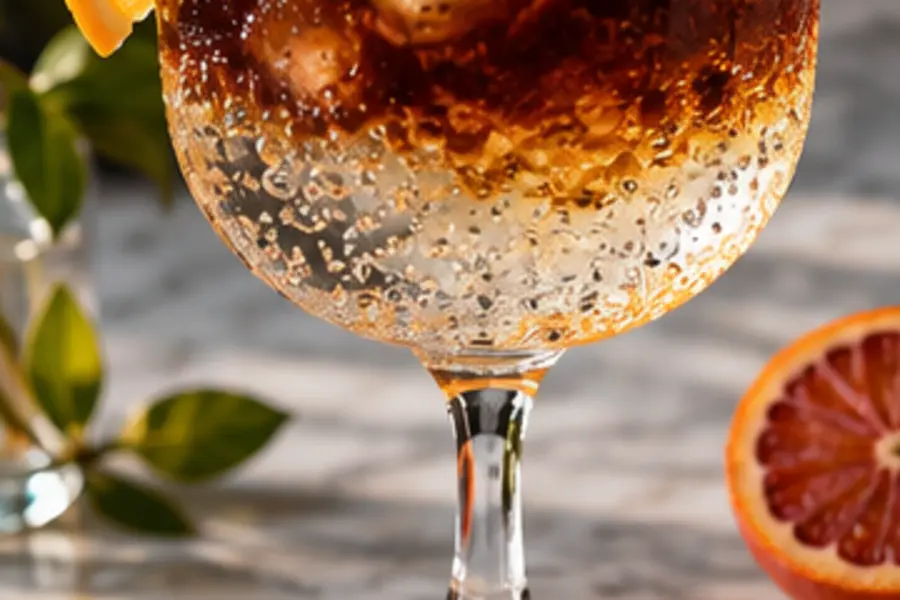
The short answer.
Cool espresso and chill sparkling water before assembly.
Leave headroom and pour slowly over the ice.
Use citrus aroma sparingly and avoid shaking carbonated liquid.
The idea
Sparkling coffee is a useful change of pace when you want an iced drink without milk. This version combines cooled espresso, sparkling water, and a small orange accent. A little syrup is optional; try the drink without it first if you enjoy the sharper side of black coffee.
Choose plain sparkling water rather than a strongly flavored soda for the first attempt. The recipe is intended to help you find a balance between coffee and bubbles before introducing another major flavor. A tall glass leaves space for foam when the liquids meet.
Ingredients and yield
- Yield: one drink; allow about 8 minutes
- 40 ml espresso, cooled
- 130 ml chilled sparkling water
- Ice cubes
- One small strip of washed orange peel
- Optional: 1 teaspoon simple syrup
- A tall glass with room above the liquid
Make it
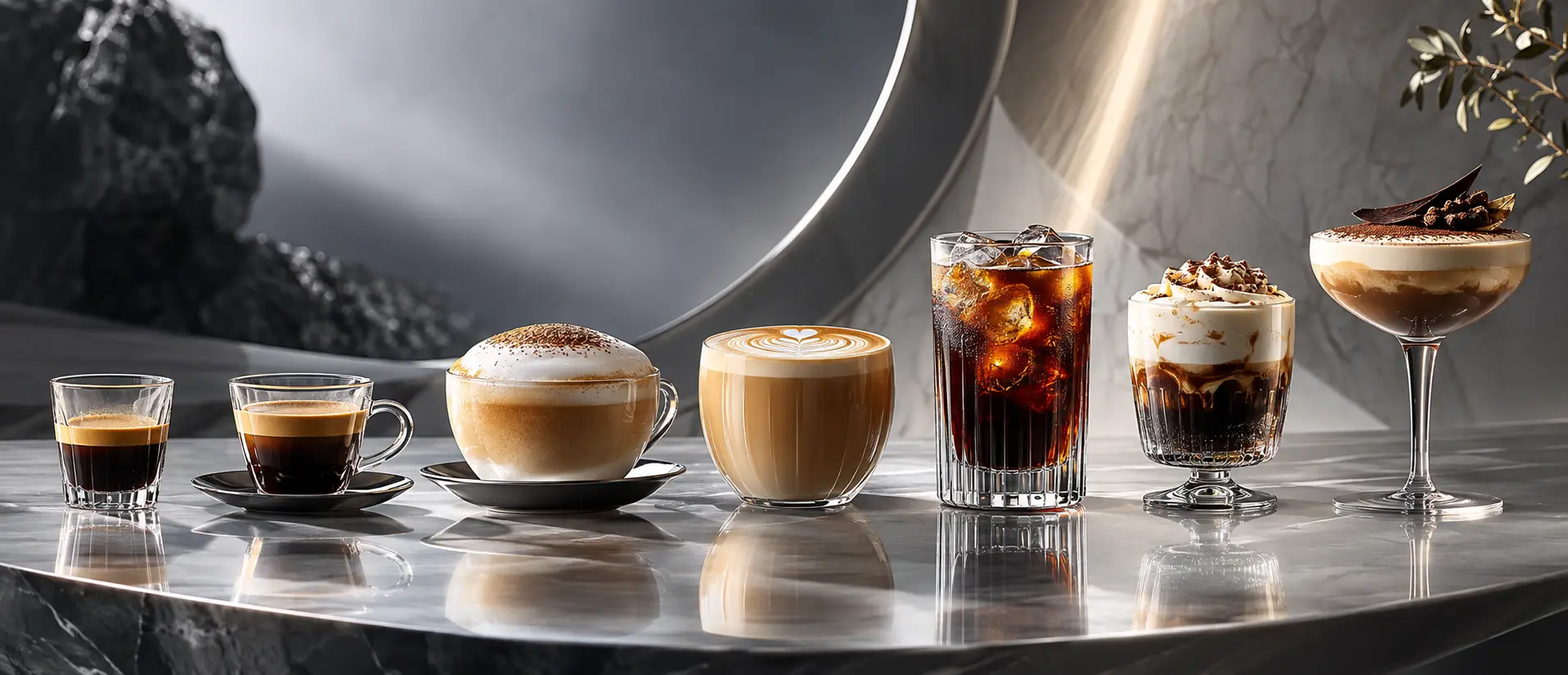
Brew the espresso into a separate cup and let it cool. Place ice in the serving glass, then add the sparkling water slowly. If using syrup, stir it into the cooled espresso first so you do not need to stir the carbonated drink vigorously later.
Pour the espresso gently over the ice, leaving headroom for the bubbles that develop. Bend the orange peel over the glass to release its aroma and set it on the rim or saucer. Give the drink one slow stir from bottom to top and taste. Add a little more sparkling water if you prefer a lighter coffee presence.
Make it your own
The order of assembly helps make the pour easier to control, but it does not guarantee a perfectly separate coffee layer. The drink's appearance will change as the bubbles rise and the ice melts. Enjoy it promptly while the sparkling water is still lively.
If the combination tastes too sharp, add a small amount of syrup before increasing the orange. Extra citrus can make the drink seem sharper still. For a gentler alternative, use half sparkling water and half chilled still water. Do not shake this drink or seal freshly mixed carbonated liquid in a container that is not designed for it. All citrus and syrup stay in the glass, and the coffee machine is used only to brew its normal espresso. Try a new coffee with the same measurements on another day to see how much the base changes the result.
Build around the bubbles
Start with sparkling water you enjoy plain. Mineral character, bubble intensity and the coffee itself all influence the final taste, so changing the water is a meaningful recipe change. If the first attempt seems severe, test a small amount of syrup in a separate sample. Do not automatically add more orange: that can shift the drink further from the clean coffee-and-sparkling-water combination you wanted.
The height of the glass matters less than the space above the liquid. Leave generous headroom and pour the cooled espresso slowly over the ice. Pause if bubbles rise rapidly, then continue. When serving two people, assemble each glass separately rather than stirring a large sparkling pitcher that may lose its lively texture before the second portion is poured.
Try a simple tasting progression: one sip before expressing the peel, one after, and one after the single gentle stir. This shows how much of the citrus impression comes from aroma rather than juice. Keep the peel on the rim or saucer if you prefer a cleaner mouthfeel, and remove it if its aroma becomes distracting.
Useful answers, before you decide.
Is this the same as espresso tonic?
No. This version uses plain sparkling water rather than tonic. Tonic would introduce its own sweetness and flavor, requiring a fresh tasting balance rather than a direct substitution.
Can I prepare it before guests arrive?
Prepare and chill the coffee and organize the glasses beforehand, but add sparkling water and assemble each drink at serving time. The finished drink is most appealing while its bubbles are lively.
 Recipes · 4 min
 Recipes · 4 min
 Recipes · 4 min