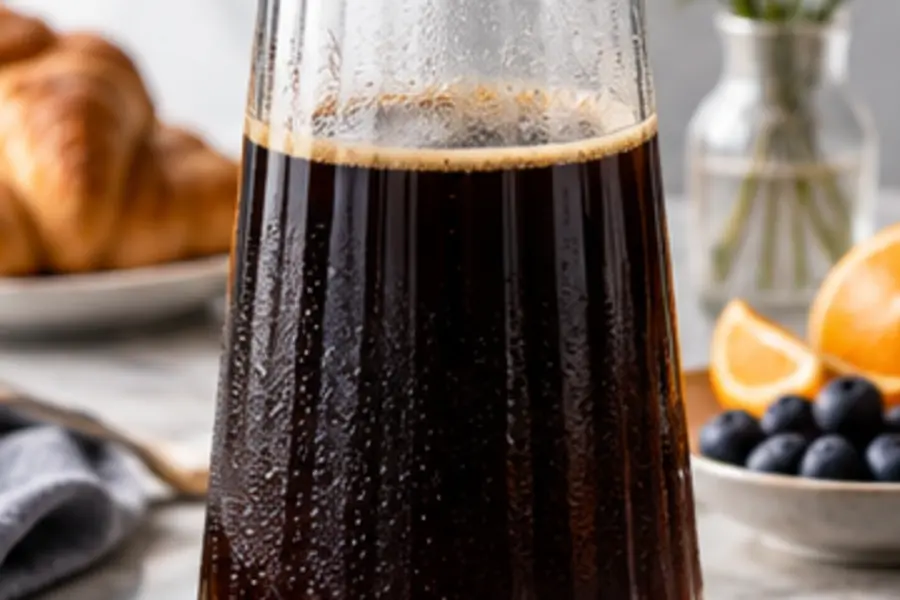
The short answer.
Time brewing for when guests actually plan to drink coffee.
Match finished yield to the cups you will use.
Keep the shared batch plain and let guests adjust individually.
The idea
A good brunch coffee service begins with a plain, dependable batch. Instead of flavoring a whole pot, this recipe offers coffee first and lets each person choose milk or sweetness. That makes it easier to accommodate different preferences without preparing several separate drinks.
The starting ratio is intended for a filter brewer that can safely handle the water volume below. If your machine has a smaller capacity, make two smaller batches using the same proportions. Do not exceed the brewer or filter basket limits to chase a single large pot.
Ingredients and yield
- Yield: about four modest coffee servings
- 60 g coffee, ground for your filter brewer
- 1 litre fresh drinking water, or less if required by capacity
- Optional: chilled milk in a small jug
- Optional: sugar or a separately prepared simple syrup
- A clean thermal server, if compatible with your brewer
- Four cups and a spoon for each sweetener

Make it
Prepare the brewer with a suitable filter and add the measured coffee. Add plain water to the water reservoir according to the machine instructions, then start the brew. If using a manual dripper, divide the recipe into batches that fit comfortably rather than overfilling the filter.
Once brewing is complete, gently swirl the server if its design permits, then pour a small tasting cup. Adjust the serving strength with a little hot water if needed. Transfer to a suitable thermal server when appropriate so guests can pour without leaving the coffee on a warming plate longer than necessary.
Make it your own
Set out small amounts of milk and replenish them from the refrigerator as needed rather than leaving a large jug out through the entire meal. Put sweeteners in clearly labeled dishes or bottles with separate utensils. If serving a plant drink, keep its carton available so guests can check ingredients.
Coffee loses some of its fresh character as it stands, so plan a second batch around demand instead of brewing far more than you expect to serve. Record the amount actually consumed; that is more useful for your next brunch than assuming every guest wants the same cup size. This is an original serving formula based on a familiar filter-coffee approach. All optional flavors stay outside the machine. If you want a vanilla option, add a drop or two of extract to an individual cup along with syrup, leaving the shared batch flexible for everyone else.

Plan the pour around the meal
Work backward from the moment people will want coffee. If guests drink it with the main brunch plate, prepare the server and cups while the food finishes. If they prefer coffee afterward, wait to brew until the table is being cleared. Brewing early simply because the equipment is free can leave the coffee waiting through the part of the meal when nobody wants it.
Measure your actual serving cups with water before planning the gathering. A nominal litre of brewing water does not translate directly into four full oversized mugs, and some water remains with the grounds. Use the finished yield and your chosen portion size when deciding whether another batch will be needed. Keep a small note after the meal showing how much coffee was left and when the second round was requested.
Arrange additions so guests do not have to crowd the brewer. Place cups and spoons where they are easy to find, keep milk service modest and replenish it appropriately, and give sweeteners their own utensils. A simple plain batch supports different preferences without asking the brewer to produce several flavored drinks at once.
Useful answers, before you decide.
Should I brew extra just in case?
Plan a modest first batch and be ready for another if demand appears. An actual consumption note from one brunch is more useful for future planning than assuming everyone will drink a large second cup.
Can I double the recipe in one brewer?
Only if the machine or manual brewer supports that capacity. Split the preparation into appropriate batches when necessary, following its instructions rather than overfilling the filter or reservoir.
 Recipes · 4 min
 Recipes · 4 min
 Recipes · 4 min