
The short answer.
Record only the details that help you repeat or improve a drink.
Keep separate preferences separate rather than averaging them.
End each experiment with a clear keep, change, or return decision.
Keep the record deliberately small
A coffee journal should help you remember, not become another chore. Start with six fields: coffee, drink, visible settings, cup, observation, and next change. Add the date if you expect to compare across bags or weeks. A note on your phone is enough; you do not need a specialized notebook or an elaborate scoring system.
Write after tasting, while the impression is fresh. One concrete sentence is better than a list of vague adjectives. “Good coffee presence, but too much milk for this cup” gives you a useful next step. “Nice” is pleasant but offers little guidance when you try to repeat the result later.
Record the baseline before experimenting
If a drink already works, save its recipe before changing it. Take a photograph of the visible settings if that is easier than typing. Keep the exact machine program name because similar drink names may have different preparation sequences.
For manual preparation, record the measurements you actually use. For an automatic, record the controls the machine exposes rather than inventing an internal dose or extraction value you cannot verify. The journal should distinguish observed information from assumptions. That makes it more reliable when you share it with a roaster or support specialist.

Make one comparison at a time
Choose a single change and write it down before the next cup. After tasting, say whether it improved the specific issue. You do not need to declare the entire coffee better or worse. It may be less sharp but too large, or more intense but less pleasant in milk.
Avoid comparing a hurried morning cup with a relaxed afternoon cup as though every condition were identical. Temperature, food, and attention can change the experience. A home journal is a practical memory aid, not a controlled scientific study. Its value comes from modest, useful observations rather than false precision.
Separate household preferences
Give each person a simple recipe name or initial. This prevents one person's adjustment from becoming a mysterious change for someone else. If the machine supports saved profiles, keep the journal aligned with those names. A shared note can also help guests or a partner reproduce a familiar drink.
Review the record after several experiments and promote one recipe to the everyday default. Keep alternatives only if you use them. There is no need to preserve every unsuccessful attempt forever.
End with a useful answer
The journal succeeds when it tells you what to do tomorrow: buy this coffee again, use this setting, reduce the milk slightly, or return to the previous version. If the notes do not lead to an action or a repeatable favorite, simplify them. Coffee should remain the enjoyable part; the record exists only to make enjoyment easier to repeat.
Put it into practice
Set a limit on the experiment itself. Decide that you will try one adjustment on a weekend or compare two coffees over the next week, then return to ordinary drinking. A journal works best when it supports a bounded question. If it starts creating pressure to evaluate every cup, reduce the record to a saved favorite and a single note about what you want to try next.
Use a four-line entry
A practical entry can contain four lines: coffee identity, drink and cup, the single change, and the result. For example: familiar coffee; usual milk drink; slightly less milk; coffee clearer and serving easier to finish. This is enough to explain why the next cup should repeat that version. It is more useful than a long list of flavor adjectives disconnected from what you actually changed.
If the result is inconclusive, write that plainly. Do not force every experiment into a discovery. Perhaps the cups were different, the milk changed, or you were distracted. Return to the baseline on another ordinary occasion. The journal should prevent confident but unsupported conclusions, not generate a story around every small variation.
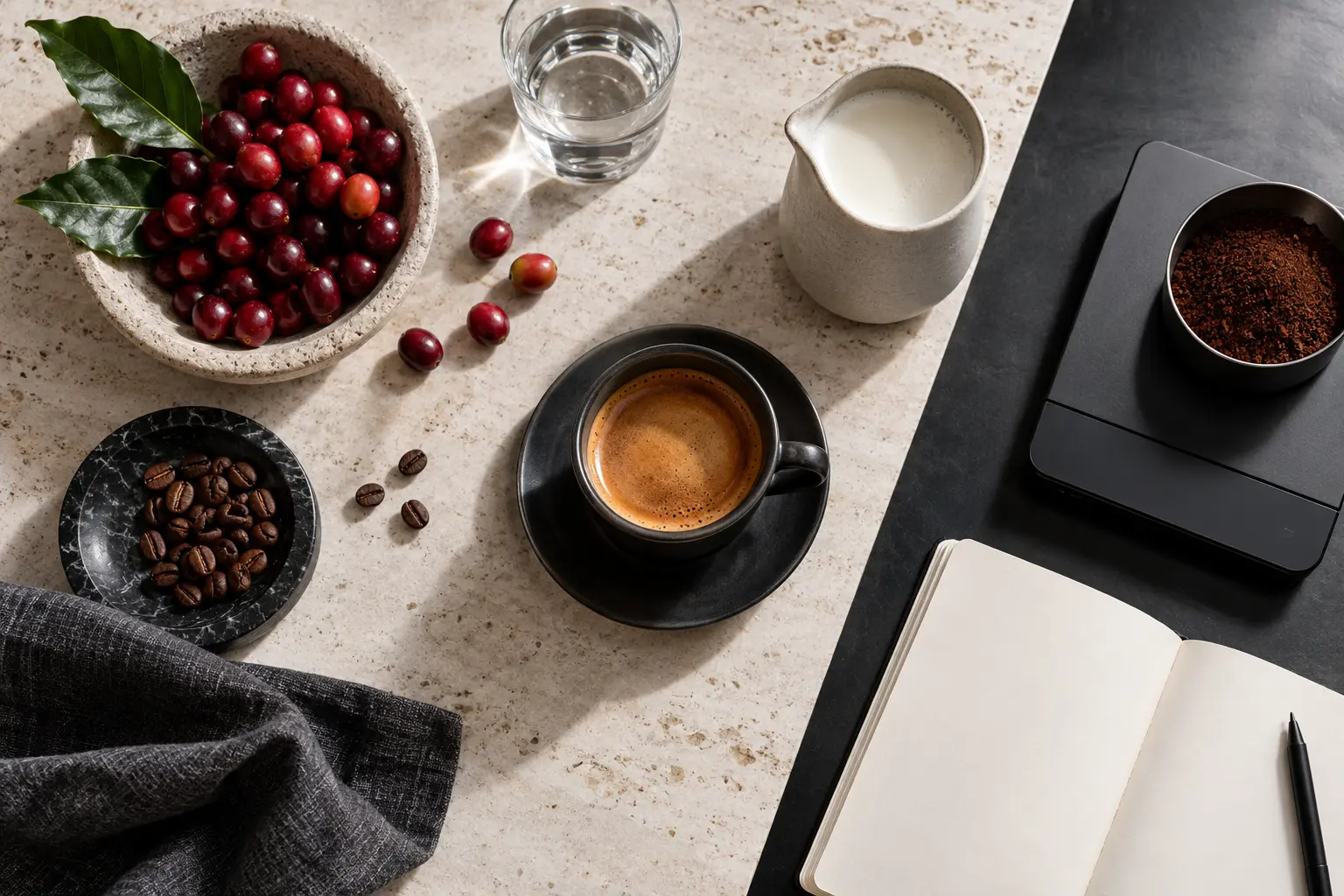
Make the record useful when something goes wrong
A short history can help when a familiar recipe suddenly disappoints. Look for a new coffee, a changed serving size, or a different milk product before assuming a fault. Keep care observations separate from taste preferences so the record remains readable. If you need support, share relevant facts about the exact model, symptom, and recent changes rather than an entire diary of unrelated experiments.
Review a few entries after several weeks and save the successful recipes where you will actually find them. Archive abandoned experiments instead of leaving a long list of near-identical choices on the counter. A good journal gradually becomes smaller and more useful: a handful of trusted recipes, a clear record of preferences, and enough context to begin again when you deliberately try something new.
Useful answers, before you decide.
What if I dislike writing notes?
Use a photograph of the packaging and a brief voice note or a few words in your phone. The format matters less than preserving the coffee, recipe, change, and outcome in a way you can find later.
Should everyone sharing the machine use the same journal?
You can share a record, but identify each person’s preferences clearly. A recipe can work well for one person and poorly for another without either observation being wrong. Separate labels prevent accidental replacement of a favorite.
 Coffee craft · 5 min
 Coffee craft · 5 min
 Coffee craft · 5 min